Articles / Subscriptions
Why Everything Costs $9.99/Month — The Psychology Trick Behind Every Price Tag
Why do prices end in 9.99?
Nine ninety-nine is not a price. It's a psychology experiment, and you have been failing it for years, possibly right now, on a tab you have open. Researchers named Anderson and Simester once tested the exact same dress at two prices in a real mail-order catalog. One tag read thirty-four dollars. The other read thirty-nine. The thirty-nine dollar version, the more expensive one, sold better. Not despite the higher number. Because of the nine.
Here's the mechanism. Your brain reads price tags left to right, encoding the first digit before it even reaches the decimal. Cornell researchers call it the left-digit effect. Nine ninety-nine gets filed in memory as roughly nine dollars, not ten. One cent does the work of a whole dollar.
How software adopted the nine-ending price
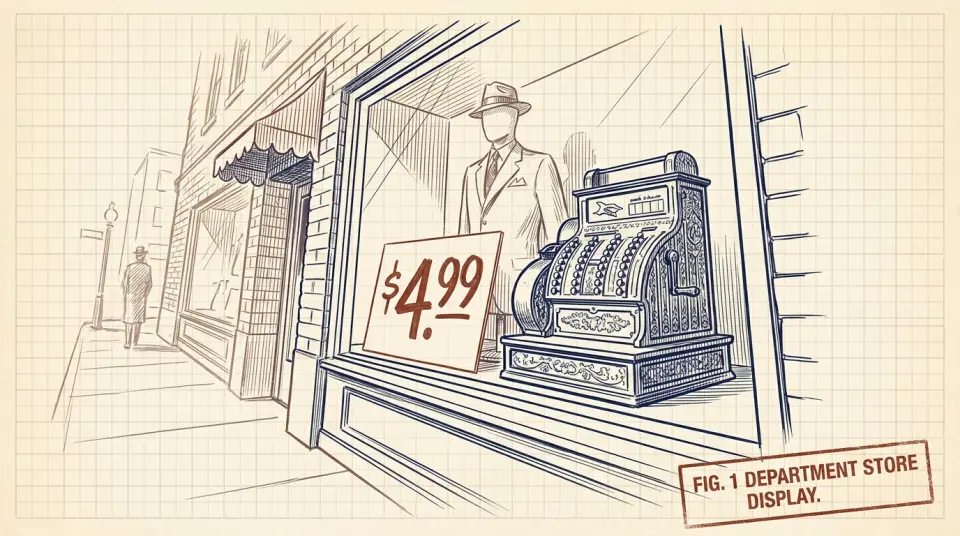
The trick isn't new. Department stores were experimenting with nine-ending prices back in the eighteen-eighties, decades before anyone said the word subscription. It survived typewriters, mail order catalogs, and shopping malls for one simple reason: it keeps working. Then software found it. In twenty thirteen, Adobe retired the boxed copy of Photoshop, the one you bought once, and replaced it with a subscription. The single-app plan launched at nine ninety-nine a month. Not because that reflected the cost of running the software. Because nine ninety-nine is the number your brain barely notices leaving your account.
Three more levers: the month, the coffee and the anchor
A month is the second lever. Ask someone to pay one hundred twenty dollars once, and they hesitate. Ask for ten dollars a month instead, and they say yes almost instantly, even though it's the exact same total, just wearing a smaller costume.
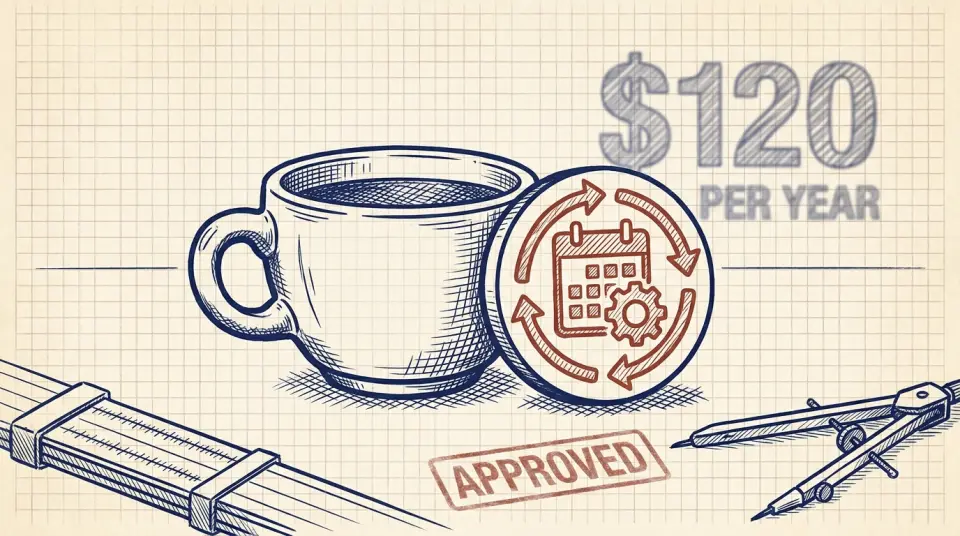
The third lever is the comparison. 'Less than a coffee a day' isn't a throwaway line, it's tested copywriting doctrine, used across meal kits, meditation apps, and streaming services alike. It works by comparing your subscription to a tiny daily purchase instead of the yearly total that would actually make you flinch. Anchoring does the rest. Show a crossed-out nineteen ninety-nine next to a new price of nine ninety-nine, and the second number looks like a rescue, even if nineteen ninety-nine never had a single real customer. The old number's only job was to make the new one look small.
How unbundling turned $80 cable into six subscriptions
There's a fourth trick, and it's sneakier: unbundling. Cable used to hand you everything for around eighty dollars a month. Streaming broke that bundle into six separate nine-to-fifteen-dollar slices, and somehow the total crept past what cable used to cost in the first place. Ledger entry: four psychological levers, the nine, the month, the coffee, the anchor, and not one of them changes what a product costs to make. They only change what it costs you to notice.
What do ten $10 subscriptions really cost per year?
Here's what that adds up to. A twenty twenty-two consumer report found the average American underestimates their monthly subscription spending by more than one hundred thirty dollars. People guess they're paying around eighty-six dollars a month. The real number, pulled straight from bank statements, lands closer to two hundred nineteen.
Stack the usual suspects and watch the nines multiply. Netflix runs about fifteen dollars a month. Spotify adds twelve. Amazon Prime folds in around fifteen more. Disney Plus tacks on another fourteen. Alone, none of these feels big. Together, you're near sixty dollars a month before buying a single physical thing.
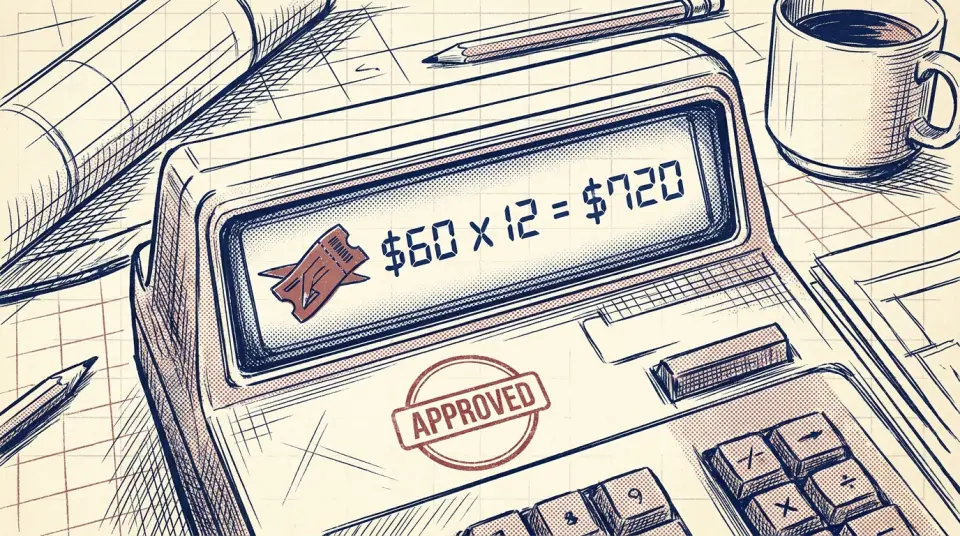
Now do the one calculation the pricing was designed to make you skip. Multiply by twelve. Sixty dollars a month becomes seven hundred twenty dollars a year. That number doesn't feel like a coffee anymore. It feels like a plane ticket, because it is one. Take Adobe's single-app plan. At roughly twenty-three dollars a month today, five years of Photoshop costs about thirteen hundred eighty dollars. The old boxed version, bought outright the last year it existed, cost around seven hundred dollars, once. The subscription doesn't just cost more. It never stops costing.
Or take a gym membership advertised at ten dollars a month. Same nine-ending trick, different outfit. Over three years that's three hundred sixty dollars, not counting the annual 'processing fee' most locations quietly add every January, betting you won't bother cancelling to avoid it. Yearly totals trigger loss aversion, a lump sum feels like losing something. Monthly totals don't, because nothing ever feels lost, just gently drained. Companies know this, which is why almost none show you the annual number by default. You have to go looking for it yourself.
Watch for the trick in reverse, too. Plenty of services now advertise an annual plan as 'just eight twenty-five a month, billed yearly', a technically true monthly figure hiding a single ninety-nine-dollar charge. Same nine-ending psychology, just aimed at locking you in for twelve months instead of one. Ledger entry: ten subscriptions at roughly ten dollars each look like one hundred dollars a month. Annualized, that's twelve hundred dollars a year, enough to buy the phone most of those apps are actually running on.
The multiply-by-twelve rule
None of this makes the products bad. It makes the price tags a little dishonest about scale. The fix isn't rage-cancelling everything tonight. It's a habit that takes about four seconds per subscription, the one step every pricing page hopes you'll never take. The rule: never judge a monthly price on its own. Multiply by twelve before deciding if it's worth it. Nine ninety-nine times twelve is one hundred nineteen dollars and eighty-eight cents. That's the number to compare against buying the thing outright, not the friendly little number at checkout.
Quick mental trick for doing this instantly: take the monthly price, double it, then move the decimal point one place right. Ten dollars becomes twenty, becomes two hundred, close enough to the real annual cost of one hundred twenty to make the decision for you on the spot.
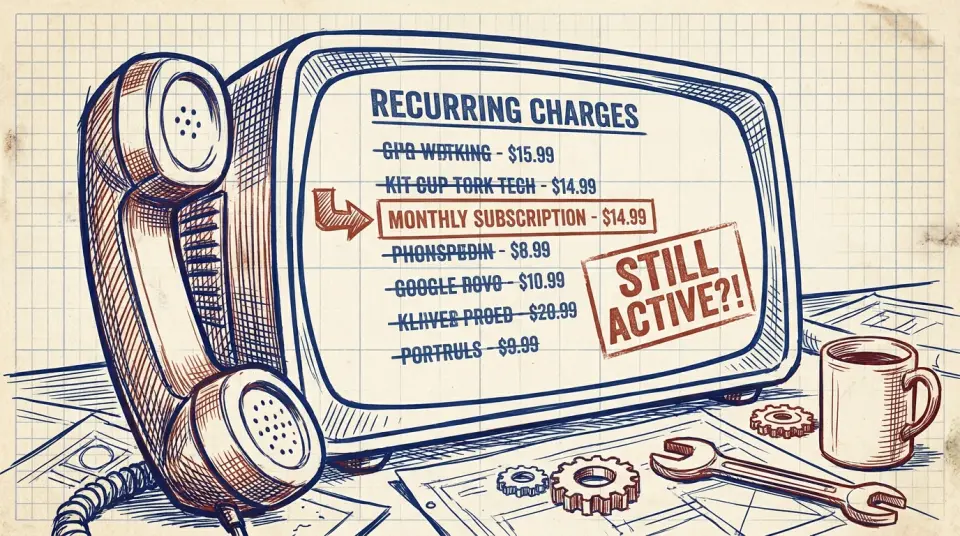
Once a year, run this audit: open your bank app, filter for recurring charges, and multiply every single one by twelve. Most people who actually do this find at least one subscription they forgot they had, still quietly charging the same nine ninety-nine it charged the month they signed up.
When should you buy instead of subscribing?
Then apply one rule: if the annual cost of a subscription beats the price of owning the equivalent thing outright within two years, buy the thing outright. Software, fonts, editing tools, even some fitness programs, most have a one-time-purchase sibling that never asks you to subscribe. Example: a photo-editing subscription at eleven dollars a month comes to about one hundred thirty-two dollars a year. A one-time alternative like Affinity Photo costs roughly seventy dollars, once. Break-even happens before month seven. Every month after that, the subscription quietly wins.
Not everything unwinds this cleanly, you can't exactly buy Spotify's entire catalog outright. But for each recurring charge, you can ask whether you're paying for genuine ongoing value, or just paying rent on a habit you formed two years ago and never once revisited.
How to read a price tag for what it is
None of the four levers, the nine, the month, the coffee, the anchor, are illegal, or even unusual anymore. They're just old tricks wearing a new interface. The moment you can name a trick, it mostly stops working on you. That's the entire defense, and it costs nothing. Think of the price tag as a small machine with three settings: shrink the digit, shrink the time window, shrink the comparison. Every 'nine ninety-nine a month, less than a coffee' sentence you've ever read was tuned on all three dials at once.
Ledger entry: the fix costs you nothing but four seconds of multiplication per subscription, once a year, arguably the highest hourly wage of any financial habit available to you right now.
So the next time a page tells you something is nine ninety-nine a month, or less than a cup of coffee, you're not looking at a price. You're looking at the output of over a century of retail psychology, aimed at the part of your brain that reads left to right and stops at the first digit.
Run the number all the way out. A single nine ninety-nine subscription, never cancelled, costs about twelve hundred dollars over ten years. Five of them running quietly in the background costs about the down payment on a car, paid in a currency of dollars so small you never felt one leave. You don't have to cancel everything. You don't have to swear off subscriptions like they're a moral failing. You just have to annualize before you agree, because that's the one step the entire pricing model was built to make you skip.
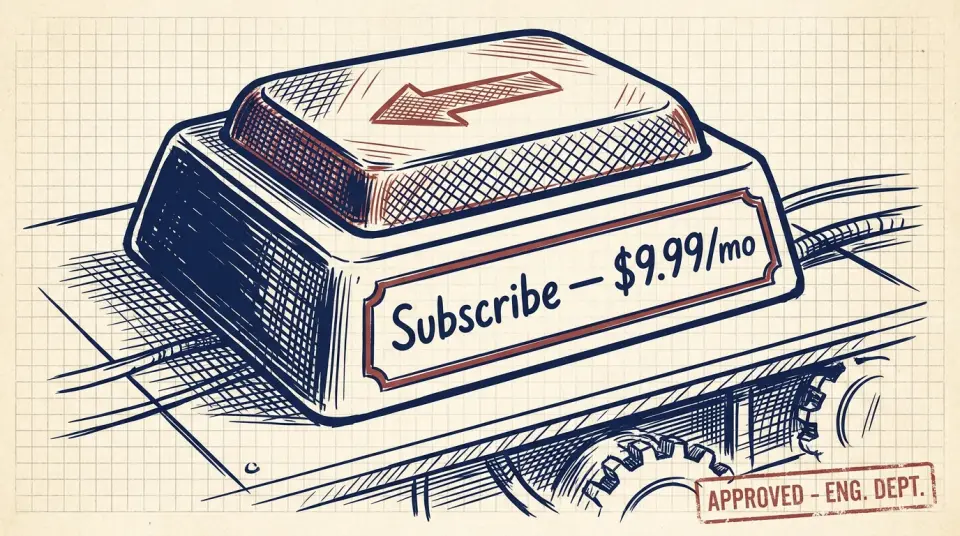
Final ledger entry: nine ninety-nine was never really about nine dollars. It was about a century-old habit of reading numbers left to right, weaponized by a modern checkout button. Now you know exactly where that button is pointing. So next time you see that little 'point nine nine' at the end of a price, see it for what it actually is, not a discount, not a courtesy, just a very old, very effective piece of psychology, quietly billing you every single month.
Watch this one on YouTube or subscribe to the channel for the next breakdown.