Articles / Built to break
BMW Charges $18/Month to Warm Seats You Already Own
BMW built the heating coils into your seats, you paid for them at the dealership, and then they locked them behind an $18/month subscription. This is "Hardware-as-a-Service": features physically inside things you own, held hostage by software. From HP's ink cartridges to smart-home gadgets that brick when the company pulls the plug, here's how ownership quietly died, and the exact way to buy your stuff back for good.
Why did BMW charge a monthly fee for heated seats?
Imagine walking into your kitchen, reaching for the toaster you bought last year, and seeing a small digital screen blinking 'Subscription Expired.' To brown your sourdough, you must now pay four dollars a month. It sounds like a tech-noir fever dream, but in the boardroom of a major German automaker, this wasn't a nightmare. It was a quarterly earnings goal. Specifically, the goal to charge you for heat.
In 2022, BMW decided that the heating coils already physically installed in your seats, hardware you paid for at the dealership, should be locked behind an eighteen-dollar-a-month paywall. Software-locked warmth in a winter you already bought.
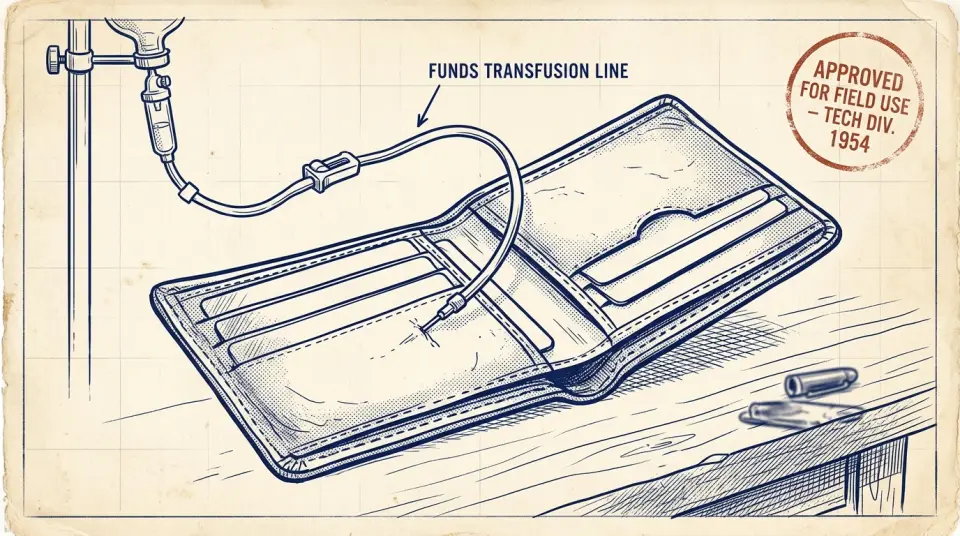
This is Hardware-as-a-Service. It’s the corporate realization that selling you a product once is a failure. To Wall Street, a one-time customer is just a ghost who hasn’t realized they’re dead yet. They want 'Recurring Revenue.' They want your bank account to have a permanent, parasitic attachment to their server. And today, we’re going to look at the escape hatch before your fridge starts charging for ice.
BMW eventually backed down on the seats, but only because the PR was a dumpster fire. The infrastructure is still there. Your car is no longer a machine; it’s a rolling vending machine.
Which products stop working when you stop paying?
It’s not just cars. Look at HP. They pioneered the 'Instant Ink' program, where your printer sends a signal to HQ the moment you print a grocery list. If your sub lapses, the printer stops. Even if the cartridges are full. They’ve essentially turned your home office into a hostage situation. You own the plastic, the glass, and the wiring. But HP owns the 'permission' to let the electricity do its job.
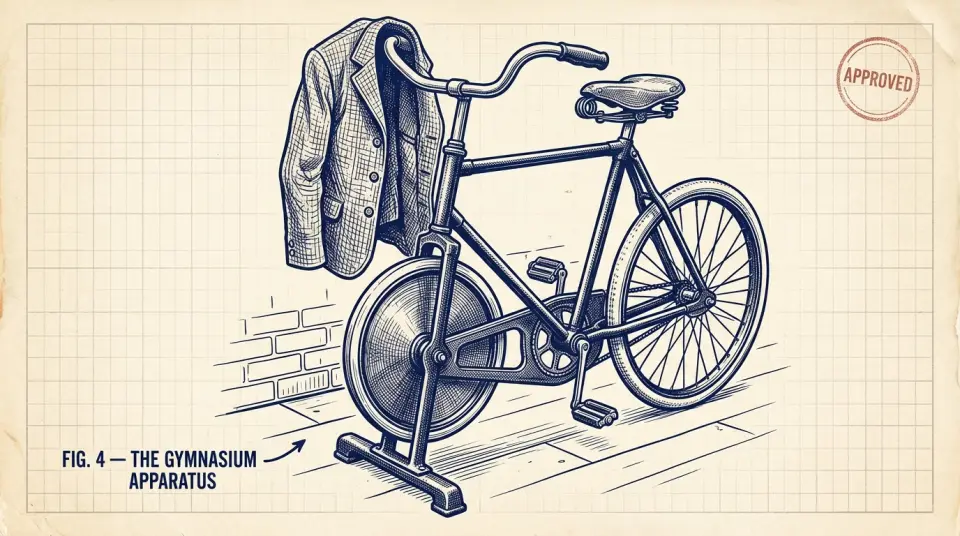
Then there’s Peloton. You spend two thousand dollars on a heavy steel bike, only to find it becomes a very expensive clothes rack the moment you stop paying the forty-four-dollar monthly 'membership' fee.
The logic is simple: If they can’t innovate, they tax. If they can’t make a better treadmill, they make the one you already have useless unless you keep feeding the meter. It’s digital feudalism. We are moving from an era of 'Buying' to an era of 'Permission.' You don’t own that smart-home hub; you’re just leasing the right to turn your lights on from a server in Virginia.
When the company goes bankrupt or decides your model is 'Legacy,' they 'brick' it. They turn your hundred-dollar smart-lock into a paperweight with a single line of code. No refund. No apology.
Why does streaming now cost more than cable?
Now, let’s pivot to the hydra in the room: the streaming stack. Ten years ago, we cut the cord to save money. We were young, naive, and didn’t realize we were just changing masters.
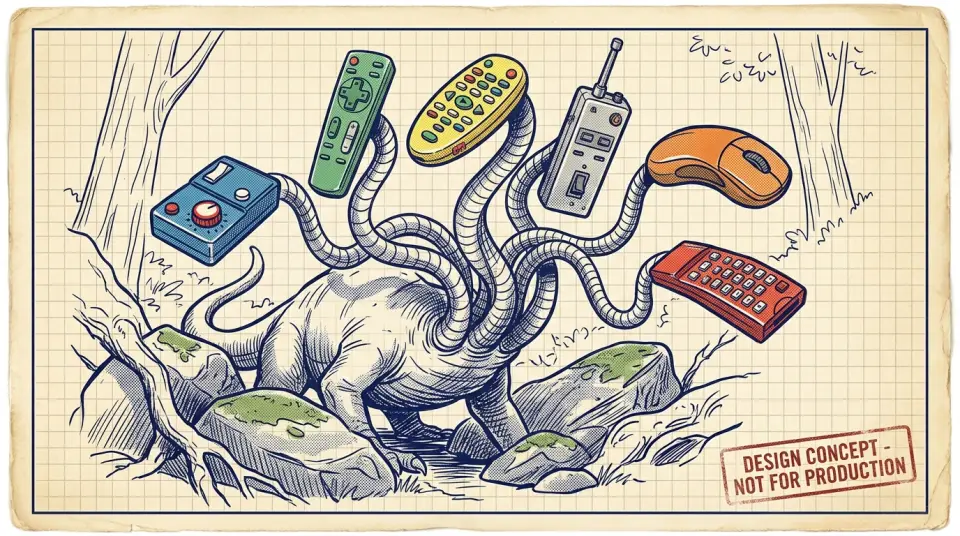
First it was Netflix. Then Hulu. Then Disney+, Max, Paramount+, Discovery+, and Apple TV. It’s like a digital game of Whac-A-Mole, but every time you hit one, ten dollars disappears from your wallet. We are now paying more for the 'freedom' of streaming than we ever did for the 'tyranny' of cable. And the best part? They’re adding ads back in. We’ve come full circle.
The content isn’t even yours. Shows disappear overnight because of 'licensing' or 'tax write-offs.' You are paying for a library card where the librarian can set your favorite book on fire while you’re reading it.
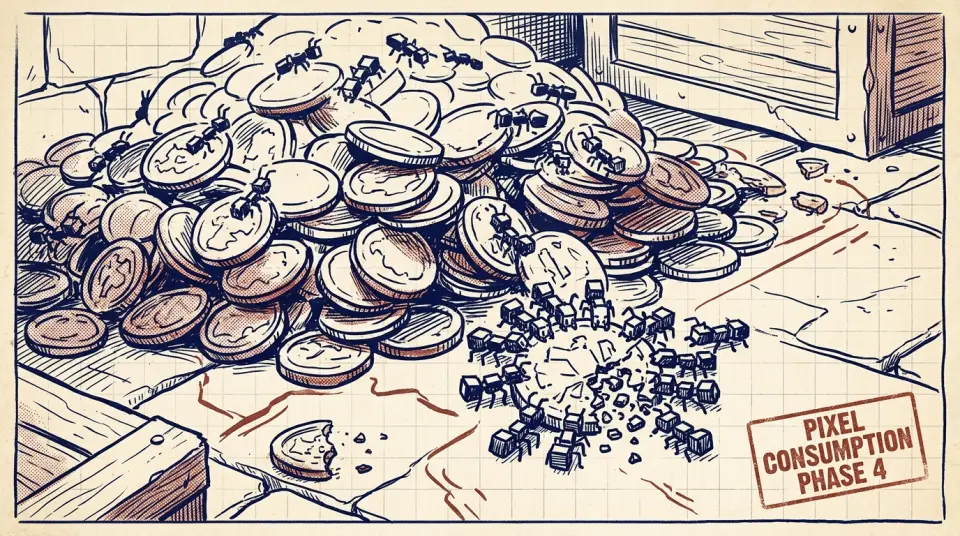
It’s a psychological trick called 'Micro-Transaction Fatigue.' They know you won't notice fifteen dollars. But fifteen dollars times six services is a thousand dollars a year. That’s a vacation. Or a lot of actual, physical Blu-rays.
How do you escape the streaming trap?
But there is a way out. A way to reclaim your digital sovereignty and stop being a line item on a corporate balance sheet. It requires a bit of 'old-school' thinking. Step one: The Rotating Method. You don’t need six services. You need one. Watch what you want, cancel it, and move to the next. It’s like dating, but with less heartbreak and more dragons.
Step two: The OTA Antenna. Most people forget that high-definition television is literally floating through the air for free. A twenty-dollar antenna gets you local news, sports, and major networks. Forever. Step three: The Media Server. This is the 'Final Boss' of ownership. Using software like Jellyfin or Plex, you can build your own private Netflix using movies you actually own on disc.
When you own the file, no CEO can delete it. No licensing agreement can pull it from your shelf. It is yours. In a world of digital ghosts, a hard drive is a solid stone wall. Then there’s the library. Apps like Libby and Kanopy give you free access to ebooks, audiobooks, and films just for having a library card. Your taxes already paid for this. Use it.
Should you buy the dumb version of smart appliances?
But back to the hardware. How do we fight the BMW-ification of our physical objects? We vote with our wallets and support the Right to Repair. If you can’t open it, you don’t own it. Before you buy a 'smart' appliance, ask yourself: 'Does this need to be connected to the internet to toast bread?' If the answer is no, buy the dumb version. The dumb version doesn't have a Terms of Service.
The 'dumb' version won't brick itself when a startup in San Francisco runs out of venture capital. It will just keep being a toaster. Which, surprisingly, is all we ever wanted from it. We’ve been conditioned to think that 'connected' means 'better.' In reality, 'connected' often just means 'monetized.' Your data is the product, and your subscription is the rent.
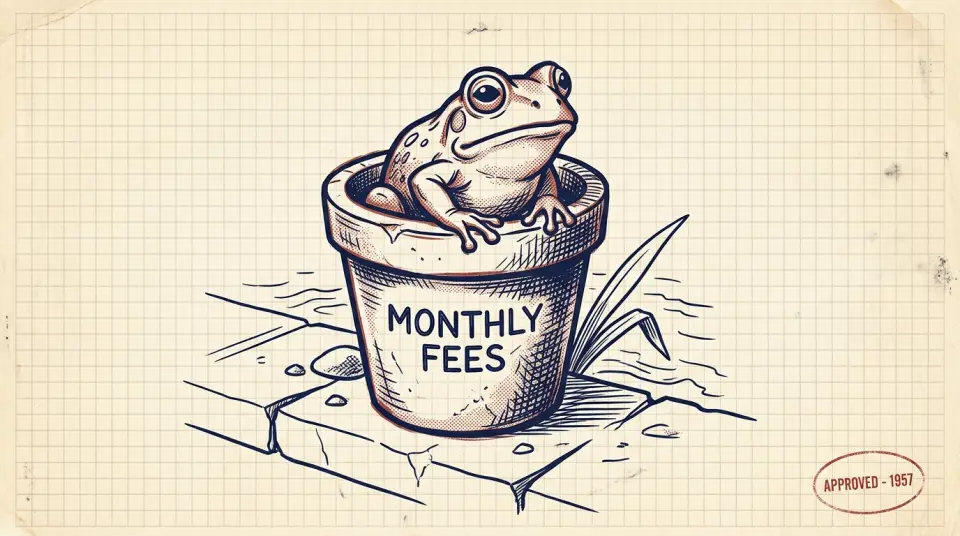
Imagine a world where you buy a car, and it's just... your car. You buy a printer, and it's just... your printer. It sounds revolutionary because we’ve been boiled like frogs for twenty years.
What does owning physical media protect you from?
When the internet goes out, the person with the Plex server is still watching 'The Office.' When the subscription service hikes its price by 30%, the person with the Blu-ray collection just shrugs. Ownership is a form of protest. It tells the giants that you are not a 'user' to be harvested, but a customer who expects value in exchange for currency. A radical concept, I know.
We are currently in the 'Everything-as-a-Service' bubble. And like all bubbles, it will eventually burst when consumers reach their breaking point. That point usually involves heated seats. The companies will tell you that subscriptions allow them to 'constantly improve' the product. But usually, those improvements are just new ways to track you or move the buttons around.
They want us to forget how to be self-sufficient. They want us to forget that once upon a time, you could fix your own car with a socket set and a bit of patience. Today, fixing your car requires a software license and a proprietary diagnostic tool that only the dealer owns. They’ve turned the 'hood' into a 'No Trespassing' sign.
How do you find and cancel recurring charges?
So, what’s the first step? Audit your bank statement. Look for the small, recurring bites. The 'vampire' charges that you forgot about three years ago when you wanted to watch one documentary.
Kill the vampires. Reclaim that fifty or a hundred dollars a month. That money belongs to your future, not to a server farm in Oregon. Buy something physical with it. Something that won't ask for a password. It’s time to stop renting your life and start owning it again. Because the only thing that should be 'recurring' in your life is your own peace of mind.
Next time you sit in a car and it offers to warm your backside for a fee, remember: you’re not a customer. You’re a subscriber. And it’s time to unsubscribe.
Watch this one on YouTube or subscribe to the channel for the next breakdown.