Articles / Built to break
They Deleted the Headphone Jack to Sell You Forever
Removing the headphone jack wasn't 'courage', it turned a buy-once pair of headphones into wireless earbuds you rebuy every two years when the glued-in battery dies. It's the quiet war on ports: every standard connection they delete (jack, SD slot, removable battery) becomes a forever-purchase. Here's the pattern, the real 10-year cost, the e-waste nobody counts, and how to keep your ports.
Why did phones lose the headphone jack?
When the headphone jack vanished from phones, they called it 'courage'. Here is what they did not call it: the start of a business where your headphones now have a battery that dies in two years, so you buy them again, and again, forever. The jack worked perfectly for a century. It was not removed for you.
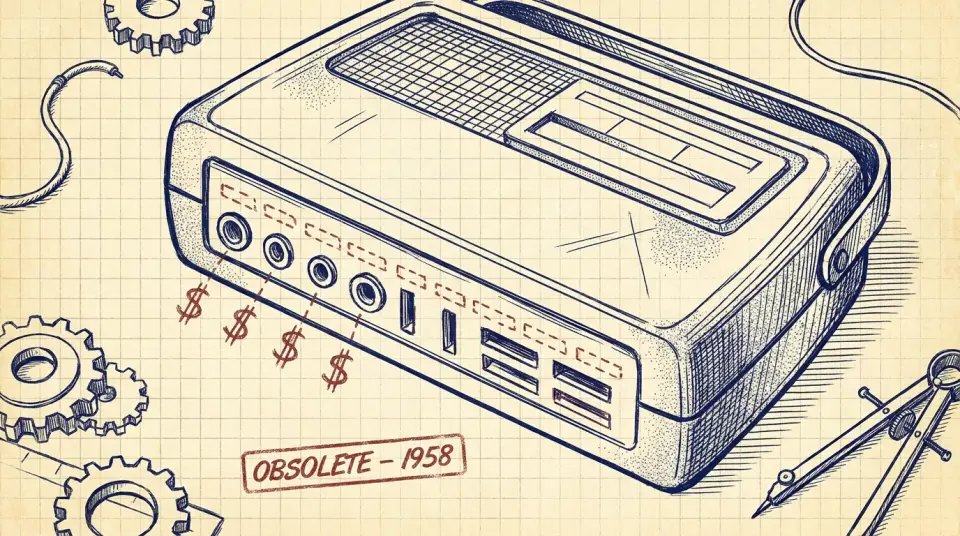
This is the quiet war on ports, the slow deletion of every standard, replaceable, repairable connection you used to own. And every port they remove turns a one-time purchase into a forever-purchase.
How does one deleted port become a forever-purchase?
Follow the money from that one deletion. Remove the jack, and your old headphones stop fitting. Now you need either a little dongle, which you will lose and rebuy, or wireless earbuds, which contain a tiny glued-in battery that degrades in about two years and cannot be replaced. A pair of headphones went from 'buy once' to 'subscribe to, slowly.'
And it is never just one port. The removable battery disappeared, so a dead battery means a dead phone instead of a five-dollar swap. The memory-card slot vanished, so you pay monthly for cloud storage or more built-in space. Every deletion is sold as 'sleeker', and every one quietly moves money from your pocket to theirs, on repeat.
How does lock-in keep you buying accessories?
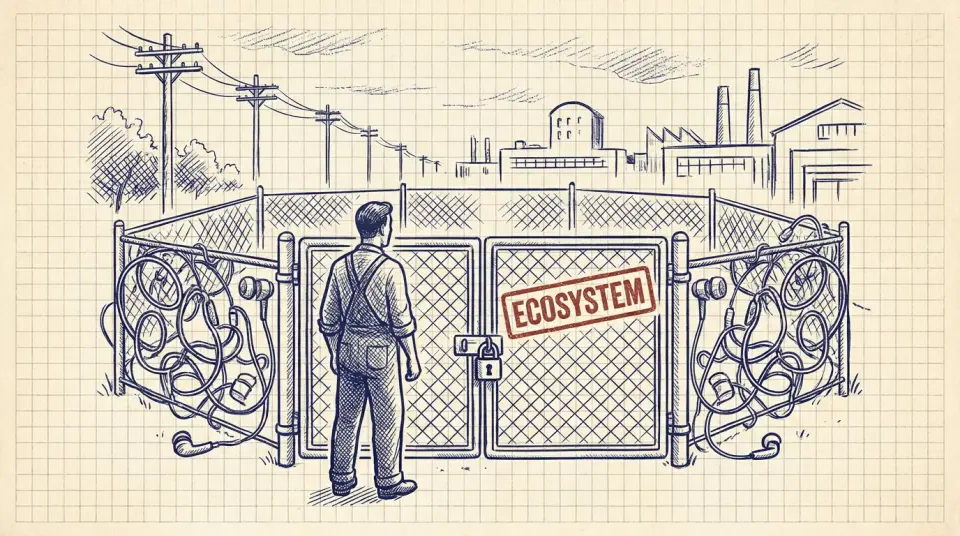
Underneath all of it is one strategy: lock-in. Once your earbuds, your charger, and your accessories only work inside one company's ecosystem, you are not really choosing their next phone, you are trapped into it. Switching brands would mean rebuying everything. The missing port is not a design decision. It is a fence, built slowly, around you.
Watch how the treadmill actually turns. The dongle you need gets lost, so you rebuy it. The earbuds pair only with their charging case, so losing the case means new earbuds. Each accessory is small and cheap on its own, that is the trick. A hundred small, cheap, forgettable repurchases add up to a fortune you never decided to spend.
How do you avoid sealed, disposable devices?
So how do you fight a fence? First, buy devices that keep the standards. Phones and laptops still exist with headphone jacks, memory-card slots, and ordinary USB-C charging that works with any cable. Reward the companies that let you keep your ports, they are rarer than they should be, and they are worth seeking out.
Second, choose repairable over sealed. A growing number of brands now sell phones and earbuds with batteries you can actually replace, turning a two-year disposable back into a ten-year keeper. When you can swap the one part that always dies, the whole device stops being a countdown timer.
Are wired headphones still the better product?
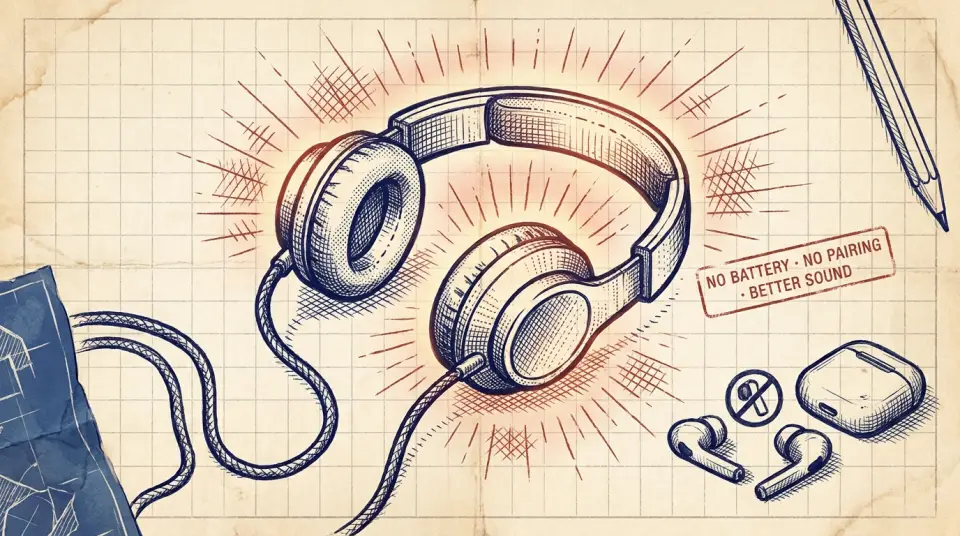
And here is the part they really don't want you to dwell on: the thing they deleted is still the best. Wired headphones have no battery to die, no pairing to drop, no charge to run out mid-song, and at any given price, they sound better, because none of your money went into radios and batteries. They killed the superior product on purpose.
What does a two-year sealed battery cost the planet?
There's a cost beyond your wallet, too. Every pair of earbuds with a sealed, dying battery becomes e-waste in about two years, unrepairable by design, impossible to recycle well. You are not just paying forever. You are throwing a small, toxic brick into landfill every couple of years, so a product that could have lasted a decade doesn't.
How can you spot the pattern in other products?

Here is the tell you can use forever: whenever a company removes something that used to work and calls it 'brave' or 'the future', follow the money. Ask one question, who has to buy something new because of this change? Nine times out of ten, the answer is you, over and over, for as long as you stay.
So vote with your money while the choice still exists. There are still phone makers who keep the jack, still brands building repairable earbuds, still laptops covered in honest ports. Every time one of us buys the device that respects ownership, we make that the profitable choice, and keep the owned option alive for everyone.
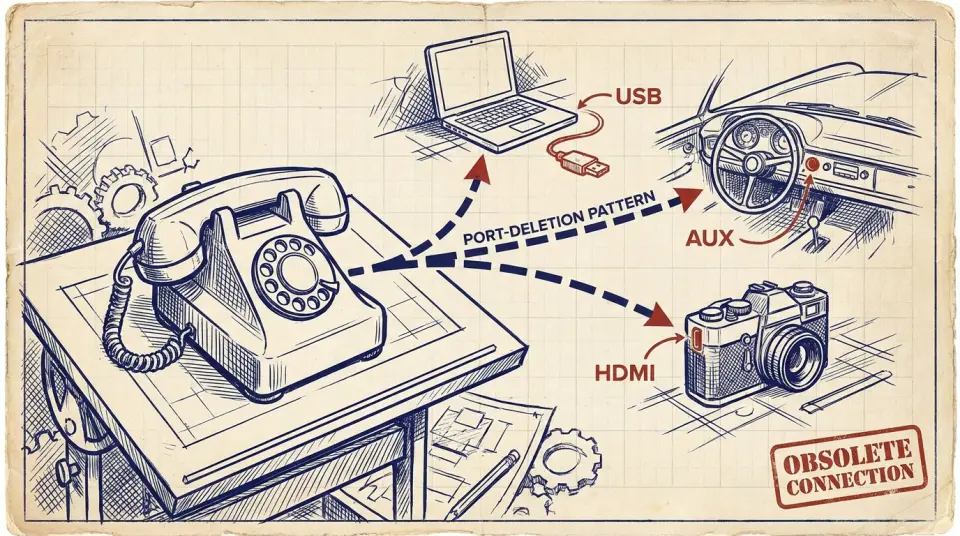
And notice the pattern is bigger than headphones. The same move is coming for every cable, every slot, every removable part you own, each one quietly swapped for something proprietary you have to rent or rebuy. Learn to spot it with your ears first, and you will catch it everywhere else before it catches you.
So reframe what a port actually is. It is not clutter to be polished away, it is freedom. A jack, a slot, a standard cable: each one is a door you can open with anyone's key, a part you can replace, a reason you never have to buy the whole thing again. Freedom was never the ugly option.
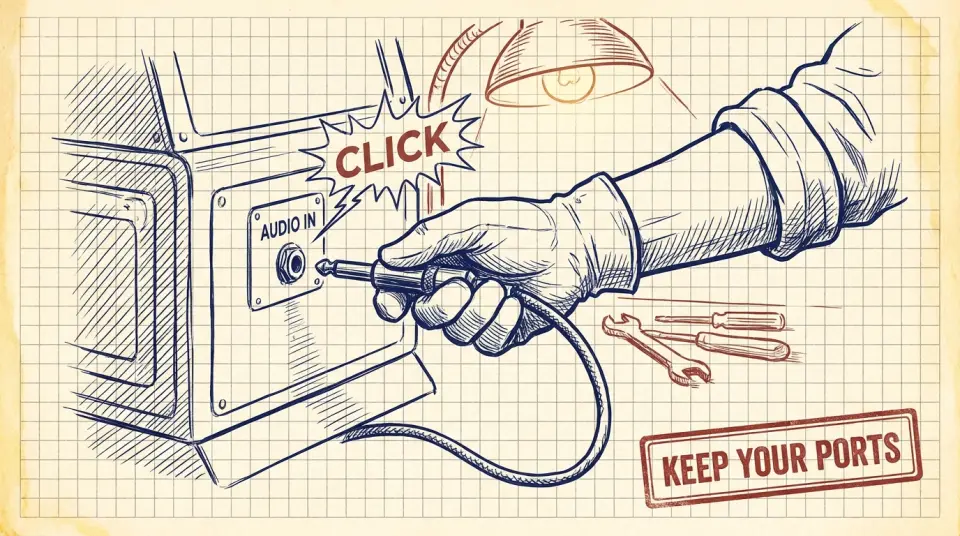
Ports are freedom. Every one they delete is one more thing you have to rent back for the rest of the product's short life. Buy the device that keeps its connections, choose the battery you can replace, and stop paying a tax dressed up as progress.
Watch this one on YouTube or subscribe to the channel for the next breakdown.