Articles / Subscriptions
The $700,000 Leak: Why You No Longer Own Your Life
The average household is quietly leaking $273/month into "invisible taxes", subscriptions that provide zero long-term value. Compounded over a working life, that's over $700,000. This is how the subscription economy was engineered to keep the middle class renting forever, and the exact playbook to opt out.
How much do subscriptions cost a household each month?
In 2024, the average American household spends two hundred and seventy-three dollars every month on subscriptions. That is not a bill; it is a leak. If you diverted that exact amount into a standard index fund starting at age twenty-five, you would have over seven hundred thousand dollars by retirement. We are living through the Great Enclosure of the twenty-first century. Your parents bought things once and kept them for decades. You, however, are being conditioned to rent your software, your entertainment, your transportation, and increasingly, the very hardware inside your home. This is the invisible tax on the middle class.
The mechanism is simple: transition from CAPEX, capital expenditure, to OPEX. Companies realized that selling you a five-hundred-dollar tool once was a bad business model. It’s far more profitable to lease you that same tool for twenty dollars a month, forever. The product hasn’t changed; only the extraction method has.
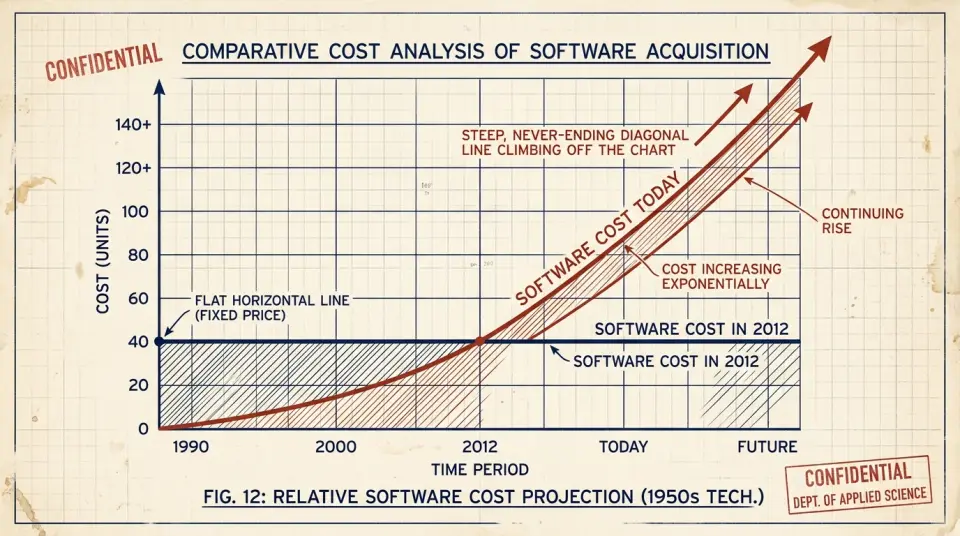
Consider the Adobe Creative Suite. In 2012, you could buy the software for a flat fee. Today, a professional paying for the full suite will spend over six hundred dollars a year. Over a forty-year career, that is twenty-four thousand dollars for the privilege of using the same basic functions. This isn't just about software. It is a fundamental shift in the architecture of the economy. We’ve moved from an 'Ownership Society' to a 'Permission Society.' You no longer buy a car; you buy a temporary license to operate it, subject to the manufacturer’s remote kill-switch and monthly feature fees.
Ledger entry: Switching from a five-hundred-dollar one-time software license to a fifty-dollar monthly service results in an eleven-hundred-percent price increase over ten years. The machine is working exactly as designed.
Why do low monthly prices feel harmless?
The psychological trick used to justify this is 'The Low-Barricade Entry.' By lowering the upfront cost to nine dollars and ninety-nine cents, the company bypasses your brain's financial defense systems. It feels like a rounding error, not a commitment. But these errors compound into a life of permanent servitude. The math of the 'Convenience Trap' is devastating. A ten-dollar-a-month streaming service doesn't cost ten dollars. It costs the future value of that ten dollars. If you have twelve such services, roughly the national average, you are hemorrhaging nearly fifteen hundred dollars a year in post-tax income.
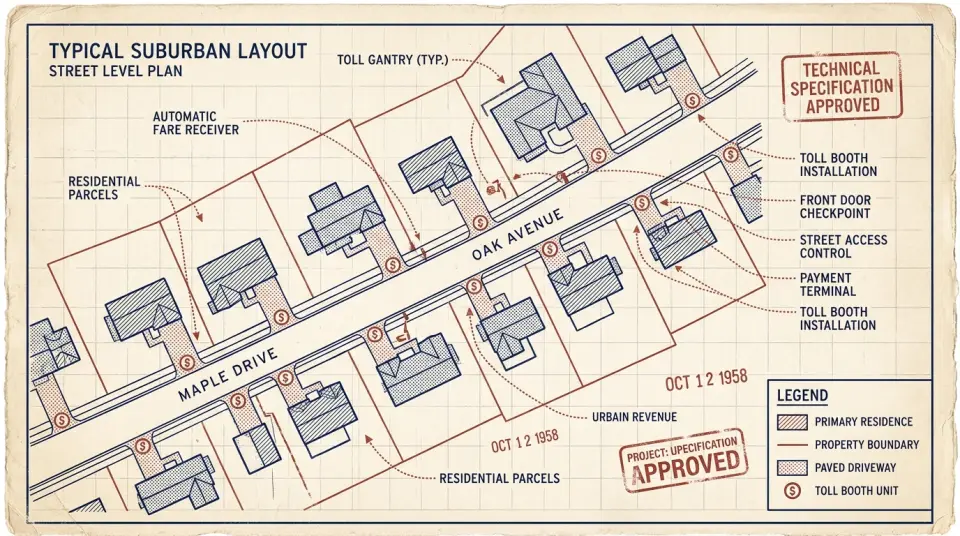
This is why your 'disposable income' feels like it's shrinking even when your salary goes up. Your lifestyle has been partitioned into dozens of tiny, recurring tolls. You are being taxed by private corporations more efficiently than you are being taxed by the government. In the corporate world, this is called 'Monthly Recurring Revenue,' or MRR. It is the holy grail of Wall Street because it makes revenue predictable. But for the individual, predictable revenue for the company means predictable depletion for the household. You are the battery in their machine.
Ledger entry: The average user spends over one thousand hours of their working life just to pay for digital services they will never actually own. You are working for months of your life to buy... nothing.
Can car heated seats become a subscription?
The next stage of the invisible tax is physical. Companies like BMW and Toyota have experimented with 'Function on Demand.' Want your heated seats to work? That’s eighteen dollars a month. The hardware is already in the car. You paid for the weight of it. Now you must pay to unlock it. This is the 'Hardware-as-a-Service' model. It turns a one-time purchase into a permanent lease. If you stop paying, your own house or car begins to degrade in functionality. It is a hostage situation disguised as a feature update.
How do you replace subscriptions with things you own?
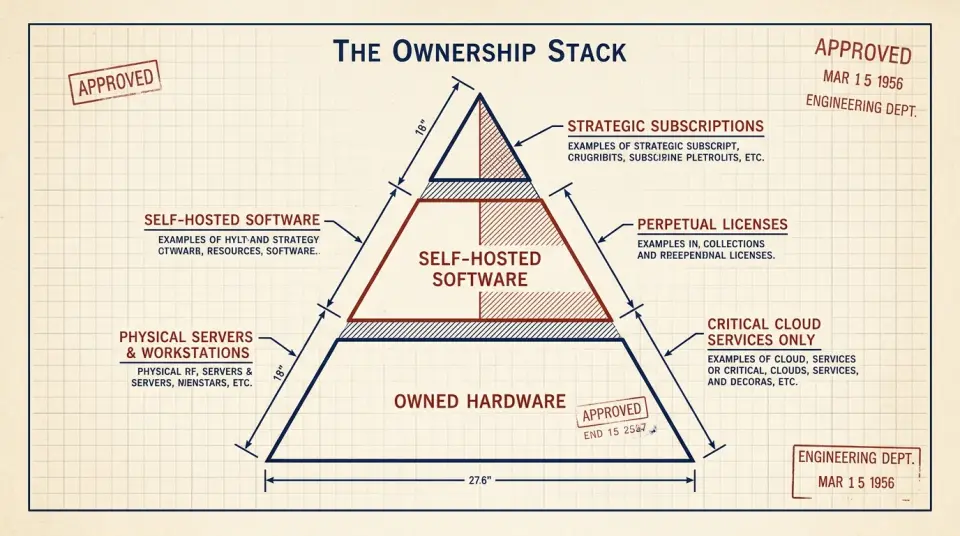
The solution is not to live in the woods; it is to master the 'Ownership Stack.' This means identifying every recurring cost and asking: Can I own the 'Machine' that provides this service? If the answer is yes, the ROI on that purchase is usually higher than the stock market. Take cloud storage. You might pay ten dollars a month for two terabytes. Over five years, that’s six hundred dollars. Or, you can buy a four-terabyte external drive or a basic Network Attached Storage device for two hundred dollars once. You’ve just tripled your capacity and cut your cost by sixty percent.
Entertainment is the largest leak. The average person pays for four streaming services. By setting up a personal media server, using tools like Plex or Jellyfin, and buying physical media or digital copies once, you create a private library that never expires and never raises its prices. Ledger entry: Replacing a ten-dollar-a-month cloud storage plan with a two-hundred-dollar owned drive pays for itself in twenty months. Every month after that is a one-hundred-percent dividend on your initial investment.
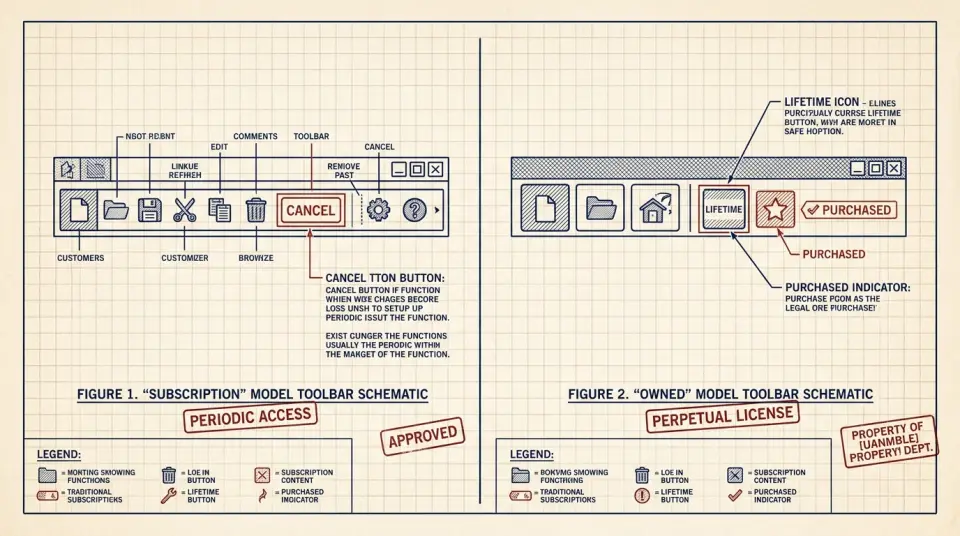
The same applies to the professional world. If you use Adobe, look at Affinity. If you use Microsoft Office, look at LibreOffice or a one-time license. These 'Owned' alternatives often provide ninety-five percent of the functionality for zero percent of the recurring cost.
How do you kill zombie subscriptions?
The most dangerous subscriptions are the 'Zombie' ones. These are the apps you forgot you had, the gym you don't visit, and the 'Free Trials' that converted. Companies rely on 'Inertia Revenue', money they earn simply because you are too busy or tired to click 'Cancel.' To kill the zombies, use the 'Virtual Card' strategy. Services like Privacy.com allow you to create digital credit cards with spending limits. Set a limit of one dollar for a free trial. When the company tries to charge you the full fee, the machine fails. You reclaim the power of the 'No.'
Is buy it for life cheaper than buying cheap?
We must also look at 'Buy It For Life' engineering. A cheap toaster costs twenty dollars and lasts two years. A professional-grade toaster costs three hundred dollars but lasts thirty. The 'cheap' option is actually a hidden subscription that costs you ten dollars a year, forever. Ownership requires a higher upfront cost, which is why most people avoid it. But the middle class was built on the ability to accumulate assets. When you trade ownership for 'access,' you are trading your long-term wealth for short-term liquidity. You are becoming a permanent tenant of your own life.
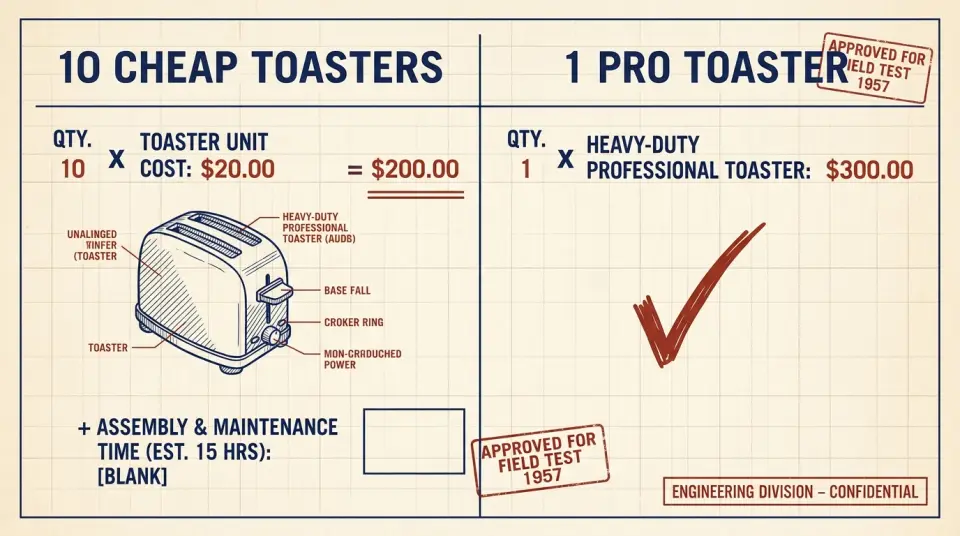
Ledger entry: Purchasing a 'Buy It For Life' appliance at 3x the price of a standard unit saves the average household over four thousand dollars in replacement costs and landfill fees over a lifetime.
How do you uncouple from recurring services?
The 'Invisible Tax' is also found in the 'Smart Home' ecosystem. Do not buy a doorbell or camera that requires a cloud subscription to view your own footage. Choose hardware that supports local storage. If the company goes bankrupt, your security system shouldn't become a paperweight. True financial sovereignty is the process of 'Uncoupling.' Uncouple your happiness from recurring services. Uncouple your productivity from rented software. Uncouple your home from corporate servers. Every link you break is a pay raise you give yourself.
Start with a 'Subscription Audit.' Export your bank statement to a CSV file. Filter for every recurring transaction. You will likely find at least forty dollars a month in pure waste, services you don't use or value. That’s five hundred dollars a year. That’s your next 'Buy It For Life' asset. The goal isn't to be a Luddite. The goal is to be an owner. Use subscriptions only for things that are truly 'Service-based', like your internet connection or electricity. For everything else, if it can be a 'Thing' you hold, hold it. If it can be a 'File' you save, save it.
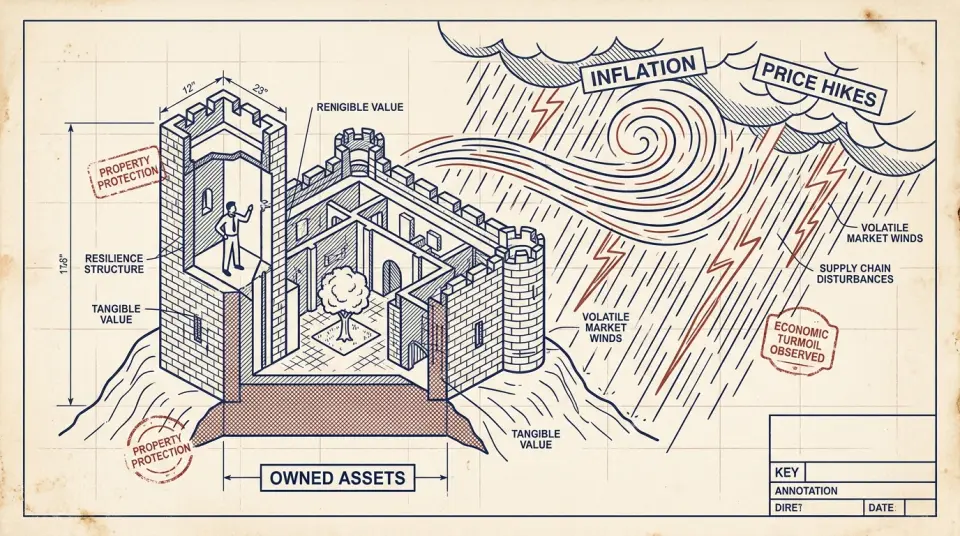
Ownership is a hedge against inflation. When you own the 'Machine', the tool, the software, the hardware, the price never goes up. In a world of infinite price hikes and 'terms of service' updates, the only safe harbor is the things you actually own.
What changes when you stop paying for access?
Reclaiming the two hundred and seventy-three dollars a month isn't just about the money. It's about the psychological shift from being a 'Consumer' to being an 'Operator.' An operator owns their infrastructure. A consumer just pays for the right to exist in someone else’s. Final Ledger Entry: Monthly savings: Two-hundred and seventy-three dollars. Potential retirement gain: Seven-hundred thousand dollars. Digital and physical sovereignty: Priceless. The machine only wins if you keep paying. Stop paying. Start owning.
Watch this one on YouTube or subscribe to the channel for the next breakdown.