Articles / Own your tech
Your Smart Home Can Be Switched Off by a Stranger
Most 'smart' homes aren't yours, your lights, locks and thermostat answer to a company's server, and when that company goes bust, discontinues the product, or your internet drops, your house stops working. Here's exactly how cloud smart-homes trap you (and the real cases where homes got bricked), plus how to build a local-first one with Home Assistant, Matter and Zigbee that works offline and answers only to you.
What happens when a smart home hub is shut down?
In 2014, a company sold a sleek three-hundred-dollar smart-home hub with a lifetime guarantee. Two years later, a bigger company bought them, flipped a switch in a data centre, and every single one of those hubs became a dead brick on the same day. The owners did nothing wrong. They just learned the truth: they never owned it.
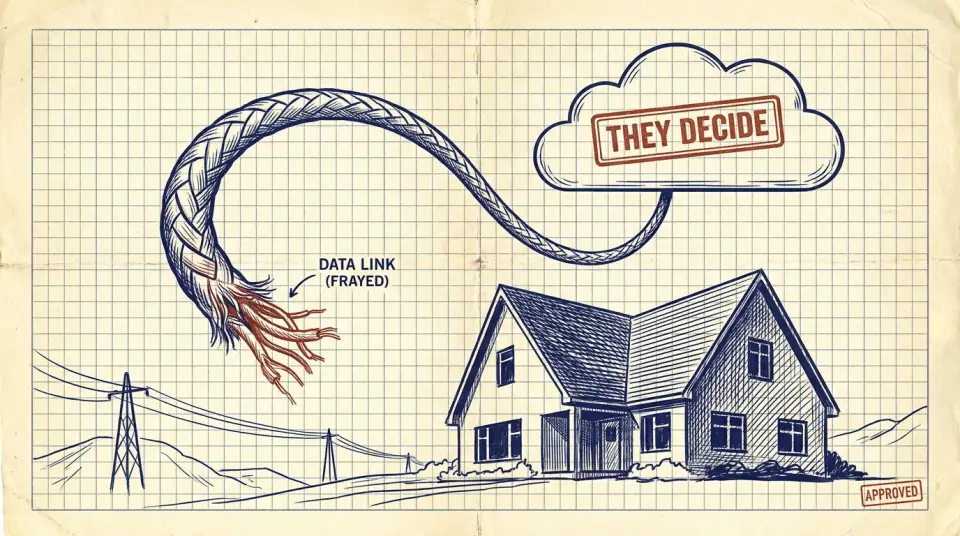
That is the hidden deal with most smart homes. Your lights, your locks, your thermostat, they do not actually answer to you. They answer to a company's server, somewhere far away, that has to keep paying its bills for your house to keep working.
How do cloud smart devices actually work?
Here is the part nobody mentions when you buy it. A 'cloud' smart device is really just a remote control for someone else's computer. When your light bulb talks to an app, it does not talk directly, it sends your command to a server across the world and waits for permission to come back. No server, no permission, no light.
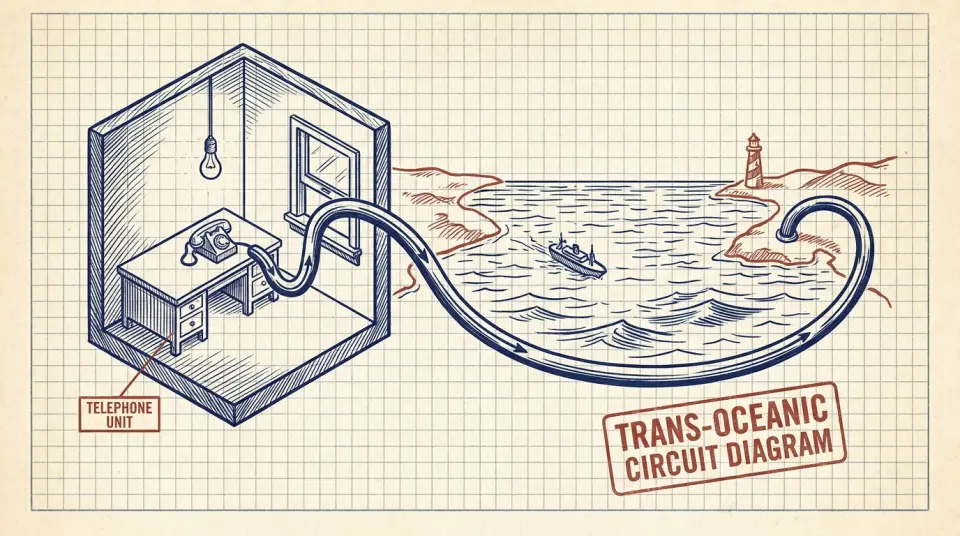
Stop and sit with how absurd that is. You are standing in your own living room, holding your own phone, talking to your own bulb six feet away, and the message takes a round trip to another continent first. You have added a stranger as the middleman to the simplest action in your home: turning on a light.
What can brick a cloud-dependent smart home?
Which means three ordinary events can brick your home. The company goes bust. The company decides your gadget is 'end of life' so it can sell you a new one. Or your internet simply drops for an afternoon. Suddenly a light switch needs a working app, a live account, and a healthy corporation just to turn on.
And this is not a rare horror story, it is a pattern. Smart locks bricked after a server shutdown. Garage doors remotely disabled over a dispute with one customer. Thermostats that lost features their owners had already paid for. Every one of these homes was 'smart' right up until a decision was made in an office the owner never saw.
What is a local-first smart home?
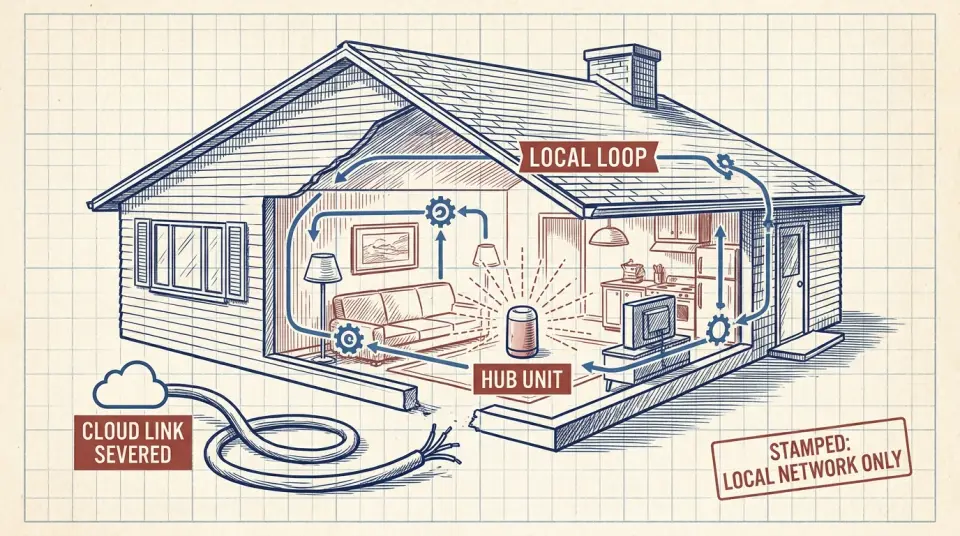
But it does not have to work this way, and this is the hopeful part. There is a whole world of 'local-first' smart-home gear that runs entirely inside your own four walls. The brain lives in your house, not in a data centre. The command goes from your phone straight to the bulb. No round trip. No permission. No subscription.
The heart of it is free software called Home Assistant, think of it as a smart-home brain you own outright. It runs on a cheap mini-computer or an old laptop you already have, and it becomes the one dashboard that controls everything, instead of juggling ten different apps that each phone home to a different company.
What are Zigbee, Z-Wave and Matter?
It speaks the open languages of the smart home: local standards called Zigbee, Z-Wave, and the newer one, Matter. The key thing they share is that devices talk to each other directly, in your house, over your own little network, not through a company's cloud. That is what keeps everything working even when the internet is down.
How do you buy smart devices you will own?
The buying rule is simple, and it will save you from every trap above. Before you bring any smart device home, ask one question: does it still work if the company disappears tomorrow? Look for the words 'local control', 'works with Home Assistant', or 'Matter'. Avoid anything that demands an account just to flip a switch.
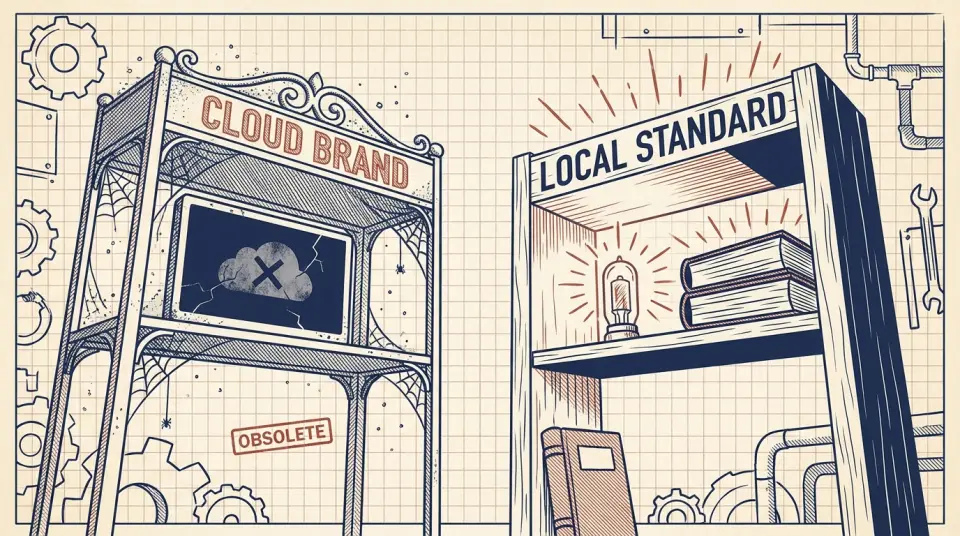
To make it concrete: good starting picks are Zigbee bulbs and plugs, a Z-Wave lock, and sensors that pair straight to your own hub. Skip the famous brands whose whole selling point is their app and their cloud. The unglamorous, standards-based gear is the stuff that will still be working in ten years, long after this year's shiny ecosystem is abandoned.
Does local control protect your privacy?
And think about what is really at stake beyond convenience. A cloud company does not just control your lights, it can see them. When you wake, when you leave, when the house sits empty. A local system keeps that map of your life inside your home, where it belongs, instead of packaging it up and selling it to the highest bidder.
Isn't the cloud easier than running it yourself?
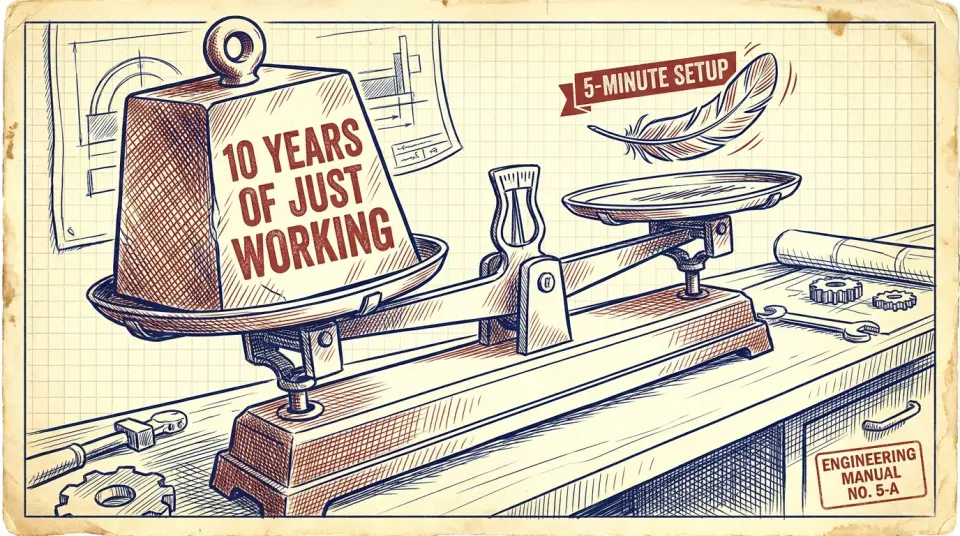
I know the objection: isn't the cloud just easier? For a day, yes. But 'easy' that can be switched off by a stranger is not easy, it is fragile. Real convenience is a light that turns on every single time, forever, no matter what happens to some company's quarterly results. Owning it is the convenient choice, measured over years instead of minutes.
This is the same principle this whole channel runs on, just pointed at your walls. Anything essential, the thing you depend on every day, should answer to you, not to a subscription. Your home is the most essential thing you have. It is the last place you should be a tenant to a server you will never see.
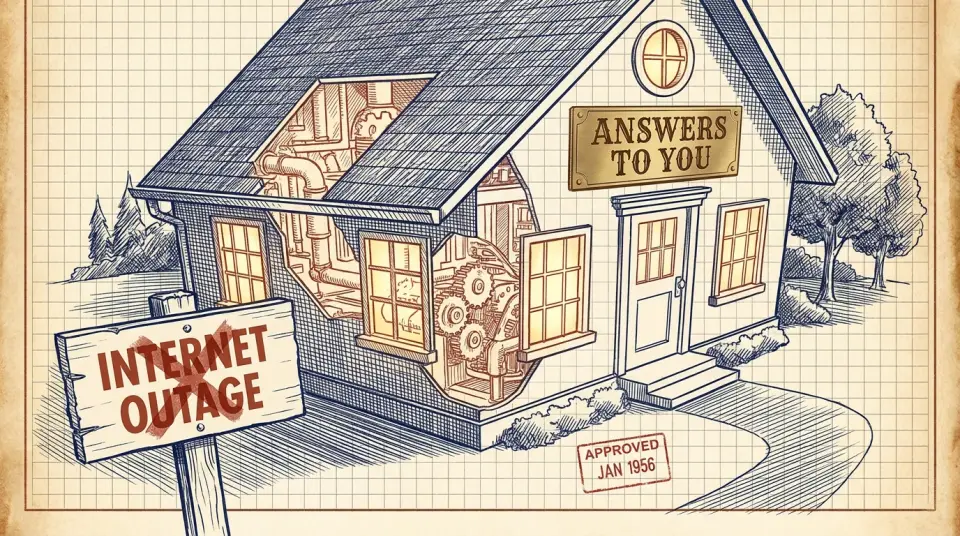
A smart home should make your life easier without making you a tenant in your own house. If a stranger in a boardroom can switch off your lights, you do not have a smart home, you have a very expensive rental. Build the one that answers to you, works offline, and keeps your life your own.
Watch this one on YouTube or subscribe to the channel for the next breakdown.