Articles / Money & mindset
The High Cost of Owning Nothing: Why Minimalism is a Financial Trap
Stop paying the 'minimalist tax.' We break down why owning more of the right things, tools, bulk goods, and software, is actually the ultimate financial move.
How minimalism turns ownership into recurring fees
The average American household now pays roughly nine hundred dollars a year for digital subscriptions they don’t fully use. We’ve been told that owning things is a burden, a weight that holds us back from a streamlined, aesthetic life. But for the modern corporation, your minimalism is their recurring revenue stream. In the nineteen-seventies, you bought a tool once and kept it for forty years. Today, you rent the software to run the tool, or you pay a convenience fee because you don’t have the space to store it. Minimalism hasn't freed us from stuff; it has turned our ownership into a permanent service fee.
Let’s look at the machine of 'Access.' The marketing promise is that you only pay for what you need, when you need it. But when you don't own the machine, you’re subject to the gatekeeper's pricing. Every time you rent a movie or hail a ride, you’re paying for someone else’s capital. This is the invisible tax of the minimalist lifestyle. By choosing not to own the equipment of daily life, you are outsourcing your resilience. You aren't avoiding costs; you are simply transforming predictable, one-time expenses into unpredictable, recurring ones.
Is owning a drill cheaper than hiring a handyman?
Take the standard household drill. A decent cordless model costs roughly one hundred and fifty dollars. To hire a handyman for a simple shelf installation, you’ll likely pay a minimum call-out fee of eighty dollars. After just two small projects, the ownership model has paid for itself.
Ledger entry: Refusing to own basic tools is a tax of eighty dollars per repair. By the third task, your 'minimalism' is costing you a hundred percent interest on the tool you didn't buy.
Why buying just enough costs more
The minimalist trap also hides in the grocery store. Buying 'just enough' for today feels clean, but the unit price is the killer. A small bottle of olive oil might run you nine dollars. A larger tin, three times the size, often costs only fourteen. By buying the small bottle to keep your pantry 'curated,' you are paying a fifty percent markup for the privilege of a smaller footprint. Multiply that across fifty staple items, and your aesthetic preference is costing you hundreds of dollars every quarter.
Consider the 'Just-in-Time' failure. When you own nothing but the basics, a single broken item creates a crisis. If you have no spare lightbulbs or charging cables, you are forced to buy a replacement at the nearest convenience store at a heavy premium. That cable might cost seven dollars online if bought in bulk. But in your moment of 'minimalist' need, you'll pay twenty-five. The lack of a spare is an invitation for the market to exploit your urgency.
Ledger entry: Inventory-free living is an emergency tax. One-off convenience purchases typically carry a three-hundred percent markup over planned, bulk ownership.
Why buy-once software beats subscriptions
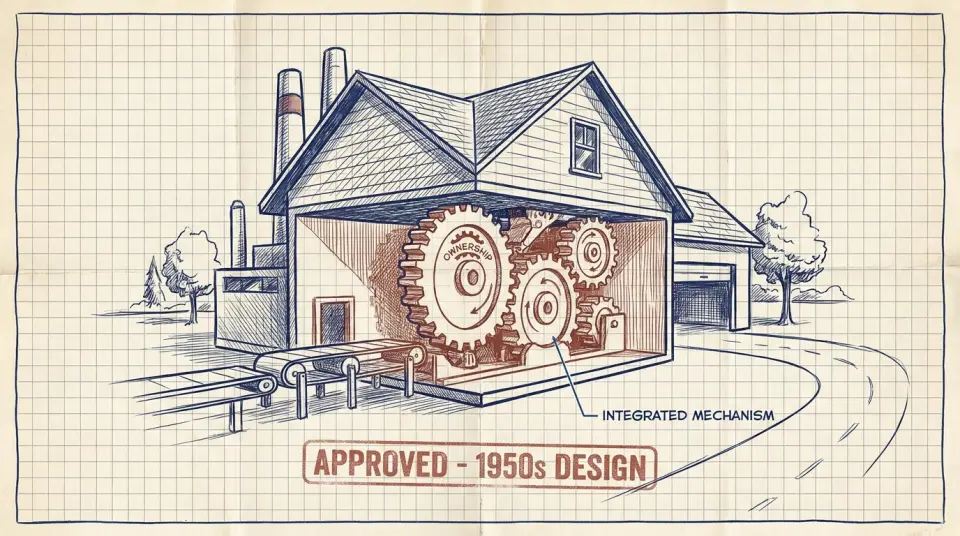
True financial autonomy requires moving up the value chain. You must transition from being a consumer of services to an owner of infrastructure. This isn't about hoarding; it's about owning the machines that make your life run.
Software is where the minimalism-as-a-trap is most evident. We used to buy Photoshop for a few hundred dollars and use it for five years. Now, Creative Cloud can cost over six hundred dollars every single year, forever. If you use a tool for more than two years, the subscription model is almost always a loss for the user. Corporations love it because it provides 'predictable earnings,' which is just code for 'guaranteed extraction from your bank account.'
The solution isn't to stop using software, but to seek out 'buy-once' licenses. Even if the upfront cost is seventy dollars, it beats a ten-dollar-a-month subscription by the seventh month. After that, the tool is effectively 'free' for the rest of its life.
Ledger entry: Software subscriptions are a debt with no end date. Switching to one-time licenses yields a hundred percent return on investment every year after the first.
Why a spare router is not clutter
Then there is the concept of 'Strategic Redundancy.' High-efficiency individuals don't own one of everything; they own two of the things that would cause a system failure if they broke. This is the opposite of minimalist clutter. If you work from home, having a spare twenty-dollar router in a box is not 'clutter.' It is an insurance policy against a lost day of work which could cost you hundreds in productivity or billable hours.
A 'minimalist' might wait two days for a replacement to arrive. In that window, the cost of not owning a twenty-dollar spare has ballooned into a massive professional liability. Your time is the most expensive thing you own; protect it with hardware.
Is borrowing or a gym membership cheaper than owning?
Let's talk about 'The Library Trap.' We are told to borrow instead of buy. This works for things you use once. But for reference materials or core equipment, the 'cost of friction', the time spent driving to the library or the rental shop, often exceeds the cost of the item. If your time is worth thirty dollars an hour, and it takes forty minutes to rent and return a tool, you have 'spent' twenty dollars in time before you’ve even paid the rental fee. If the tool costs forty dollars to buy, you're losing money by the second rental.
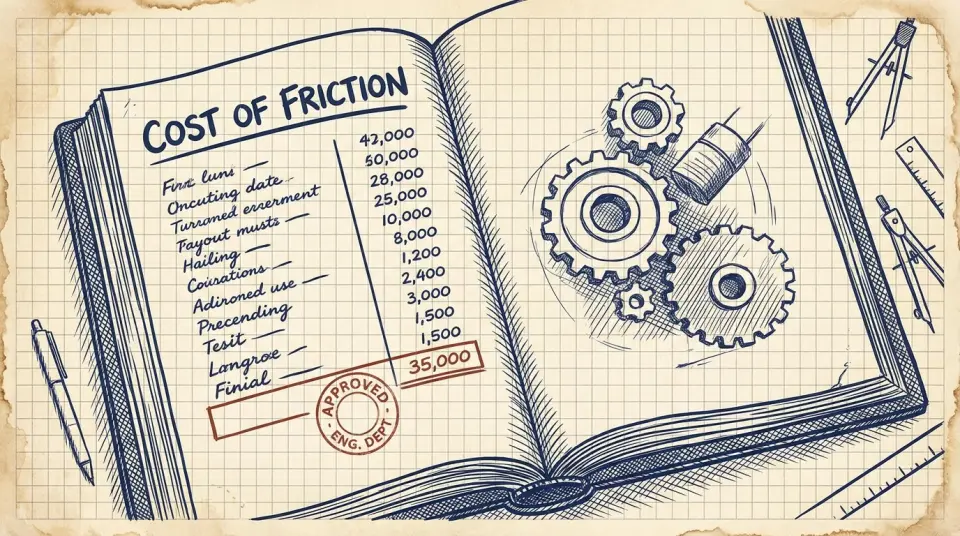
Ledger entry: Outsourcing ownership only saves money if your time is worth zero. For a working professional, 'borrowing' frequently used items is a form of negative income. The trap also applies to your health. A minimalist might avoid 'bulky' exercise equipment, preferring a sixty-dollar-a-month gym membership. Over three years, that membership costs over two thousand dollars.
A high-quality home setup might cost eight hundred dollars upfront. It occupies space, yes. But it pays a dividend of sixty dollars every single month. By year two, you are effectively being paid to work out.
Clutter versus inventory
The key is to differentiate between 'clutter' and 'inventory.' Clutter is stuff that has no utility and no path to saving you money. Inventory is a stock of resources that reduces your future expenses and increases your speed of action. Inventory is a hedge against inflation. If you buy a year's supply of coffee or detergent today, you are locking in today's prices. In a world where costs rise by five percent a year, your 'excess' ownership is actually a high-yield savings account.
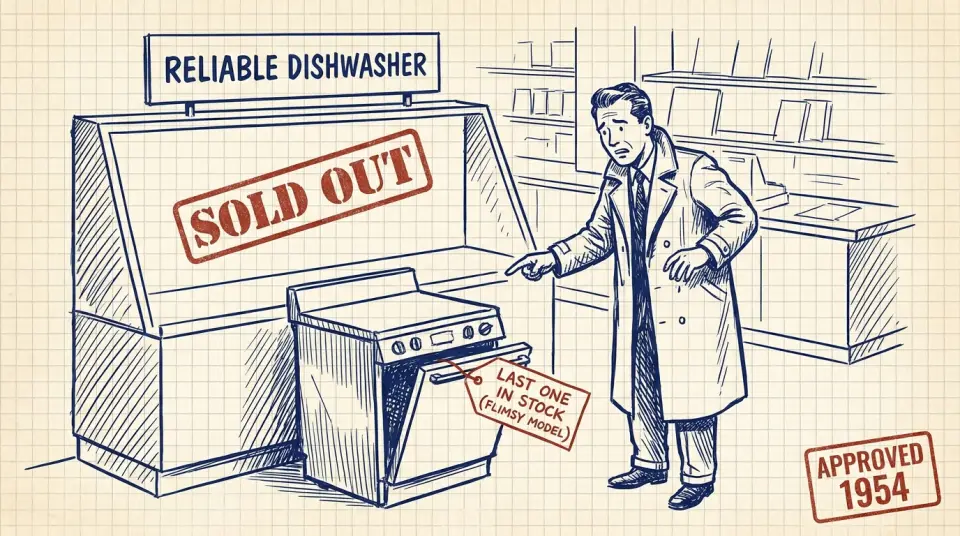
Consider the 'Appliance Gap.' When an appliance breaks, the 'minimalist' without a backup or the tools to fix it is at the mercy of the replacement market. They buy whatever is in stock at the local big-box store, usually a mid-tier model with a high failure rate. The prepared owner, however, has the parts on hand, a twelve-dollar capacitor or a twenty-dollar belt, to keep the high-quality machine running for another decade. They own the knowledge and the components, avoiding a five-hundred-dollar replacement cycle.
Ledger entry: Spare parts are the cheapest form of insurance. A twenty-dollar inventory can protect a thousand-dollar asset from the landfill.
How to audit what you should own
So, how do we escape the trap? We start by auditing every 'convenience' we pay for. If you find yourself paying for access to the same thing more than three times a year, the math usually dictates that you should own it. We stop buying for the 'aesthetic' of an empty room and start buying for the utility of a functional life. Owning the right things, quality tools, bulk supplies, and permanent software, is the only way to stop the bleed of the subscription economy.
Minimalism should be about removing the noise, not removing your legs. When you own the infrastructure of your existence, you are no longer a 'user' to be monetized; you are an owner with a fortress.
Every item you own should serve a purpose: to save you time, to save you money, or to provide a capability you didn't have before. If it does those things, it isn't clutter. It’s capital. The final ledger entry is simple: Ownership is the only way to buy back your future. The 'light' life of the minimalist is often the most expensive one to maintain. Choose to own, choose to prepare, and stop paying the invisible tax.
Watch this one on YouTube or subscribe to the channel for the next breakdown.