Articles / Money & mindset
The High Cost of a Cashless World
The cashless world is marketed as progress, but it’s actually a system of 'invisible taxes' and revokable permissions. In this article, we break down the real math of transaction fees and why cash is the only form of money you truly own.
What happens when the card network goes down?
On July eighth, twenty twenty-two, a single network outage at Rogers Communications effectively deleted the purchasing power of twelve million Canadians. For fifteen hours, debit cards became useless plastic. People stood at grocery checkouts with full carts, unable to buy a loaf of bread because the permission layer of their money had vanished. When you use cash, the transaction is a closed loop between two people. When you tap a card, you are inviting a half-dozen multi-billion dollar corporations into the room to verify, log, and tax that exchange. We have traded sovereignty for three seconds of convenience, and the bill is finally coming due.
How do card fees quietly drain a community?
To understand the machine, we have to look at the 'interchange fee.' Every time you swipe, the merchant pays roughly two point eight percent to the banks. This isn't just a business expense for the shop owner; it is an invisible tax that is baked into the price of every gallon of milk you buy.
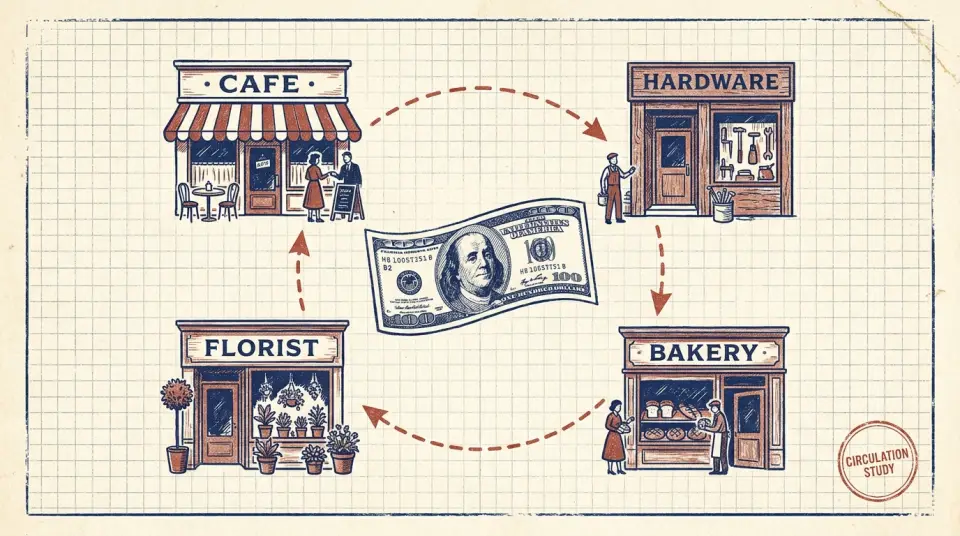
If you take a hundred-dollar bill and spend it at a cafe, the owner now has one hundred dollars. If they spend that same bill at the hardware store, the hardware store owner has one hundred dollars. After twenty transactions, that physical bill is still worth exactly one hundred dollars to the person holding it.
But if those same twenty transactions happen digitally, the math changes. After twenty rounds of three-percent fees, that original hundred dollars has withered away. The banks have extracted nearly forty-five dollars in friction costs, leaving the local economy with only fifty-five dollars of actual purchasing power. Ledger entry: The cashless machine converts twenty-five percent of a community's circulating wealth into bank profit every dozen transactions. It is a slow-motion leak in your local economy.
Why do you spend more with a card than with cash?
Then there is the psychological friction. MIT researchers found that people are willing to pay up to one hundred percent more for the same item when using a credit card instead of cash. Cash has 'weight.' You feel the physical loss of a fifty-dollar bill in a way you never feel a digital 'ok' on a screen.
Digital spending activates the same brain regions as a game, while cash activates the regions associated with pain. The industry calls this 'removing friction.' But friction is exactly what keeps you from overspending. Without it, the average household carries a balance that incurs sixteen percent interest.
How do digital tip screens take a cut of tips?
Consider the 'Digital Tip.' You’ve likely noticed the touchscreens at bakeries or coffee shops offering options for twenty, twenty-five, or even thirty percent. This isn't just generosity; it's a design choice. The software company taking a cut of the total transaction wants that number as high as possible.
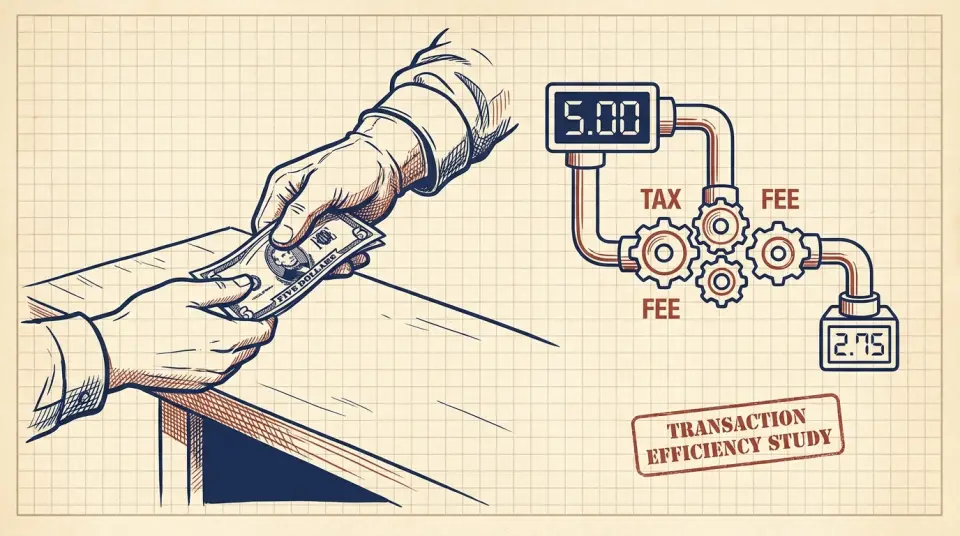
When you tip five dollars in cash, that five dollars goes into the pocket of the worker. When you tip five dollars on a screen, it is processed as revenue, taxed, and subject to a processing fee. By the time it hits the employee's paycheck, it may have lost ten percent of its value. Ledger entry: Frictionless payments increase personal spending by roughly twelve percent while simultaneously siphoning a portion of worker tips into corporate processing fees.
What does every card payment reveal about you?
Beyond the math, we have the issue of surveillance. Every digital transaction creates a data point: what you bought, where you were, and what time it was. This data is the raw fuel for the brokerage industry, which turns your private habits into a product sold to insurance companies and lenders. If you buy a pack of cigarettes and a bottle of whiskey every Friday, that data is recorded. To a health insurance algorithm, you are now a higher risk. Cash is the only way to transact that doesn't leave a permanent, searchable breadcrumb trail for an AI to judge you in ten years.
Can a bank cut you off from your own money?
In a cashless society, your ability to participate in the world depends entirely on your 'status' with a private company. If a bank decides your business is 'high risk', even if it is perfectly legal, they can 'de-bank' you. They can cut off your ability to pay rent or buy food with a single line of code.
This isn't a conspiracy theory; it’s a feature of the system. In twenty twenty-two, the UK saw over three hundred thousand bank accounts closed without a detailed explanation. When your money is a service you rent, the landlord can evict you at any time.
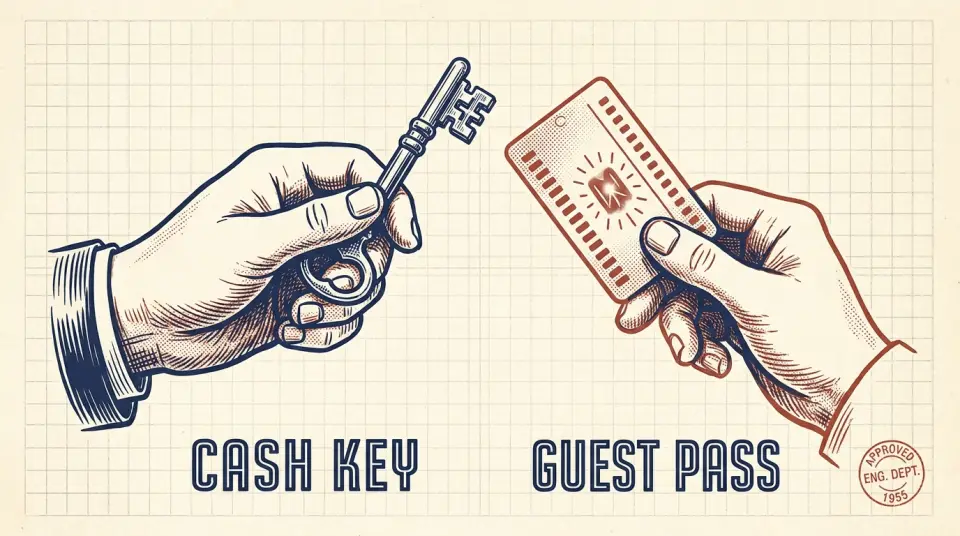
Ledger entry: Digital money is permission-based. Physical cash is possession-based. The shift to cashless is a shift from ownership to a revocable license to spend. We also have to consider the fragility of the grid. Our entire economy now rests on the constant availability of electricity and high-speed internet. When a storm hits or a submarine cable is cut, the digital economy grinds to a halt. Cash is the only financial technology that works when the power is out.
How does paying cash help small businesses?
Look at the 'Cash Friday' movement or the 'Cash Stuffing' trend on social media. Younger generations are rediscovering that physical envelopes of money are a more effective budgeting tool than any app. It’s an analog solution to a digital problem: the problem of invisible numbers. When you use cash, you are also supporting the merchant. For a small business with a ten percent profit margin, a three percent credit card fee isn't just three percent of the price, it's thirty percent of their actual profit. By paying cash, you are giving that thirty percent back to the shopkeeper.
This is why many small businesses are now offering 'cash discounts.' They are literally willing to lower their prices just to bypass the digital gatekeepers. It’s a rare moment where the consumer and the business owner both win by cutting out the middleman. Ledger entry: Cash is a localized stimulus package. It ensures that one hundred percent of the value you exchange stays within the two parties involved, rather than leaking into the global financial strata.
How do you keep the cash option alive?
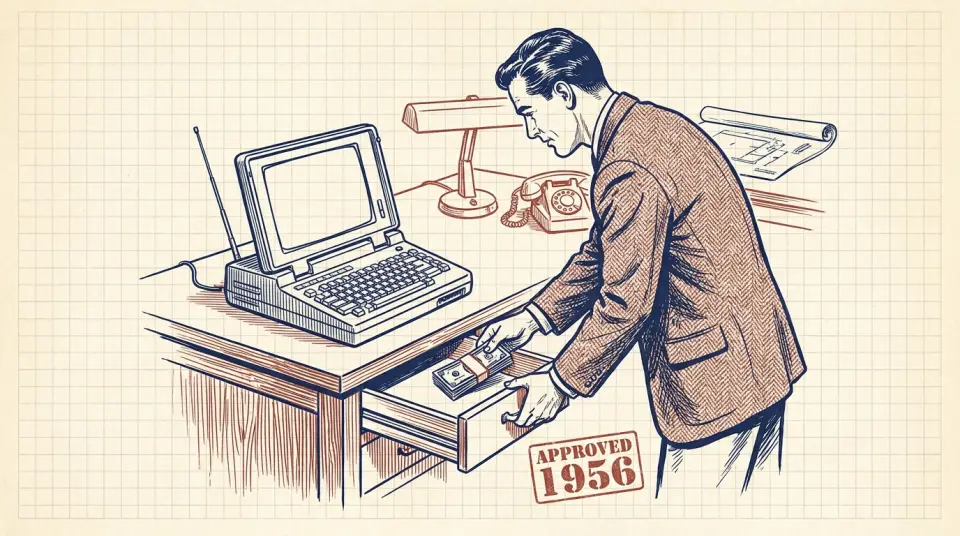
So, how do we push back without living in a cave? It’s not about abandoning cards entirely; it’s about maintaining the 'Cash Option.' If a society loses its ability to transact offline, it loses its last line of defense against total financial oversight and system failure. The 'Cashless' future is often marketed as inevitable progress. But progress should make us more resilient, not more dependent. A system that can be turned off by a central authority or a server error is not an upgrade; it’s a vulnerability.
Think about the 'unbanked.' There are roughly six million households in the US with no bank account. As businesses go cashless, these people are effectively banned from participating in the economy. Cash is the most inclusive technology we have, it requires no ID, no credit score, and no smartphone. Every time you choose to pay with a bill instead of a tap, you are casting a vote for a decentralized economy. You are saying that your transaction is your business alone. You are keeping the 'analog exit' open for yourself and your community.
If you look at the growth of digital payment volume, it has climbed steadily for a decade. But the hidden cost of this growth is the erosion of our financial privacy. We are moving toward a world where every single cup of coffee is a matter of public, or at least corporate, record.
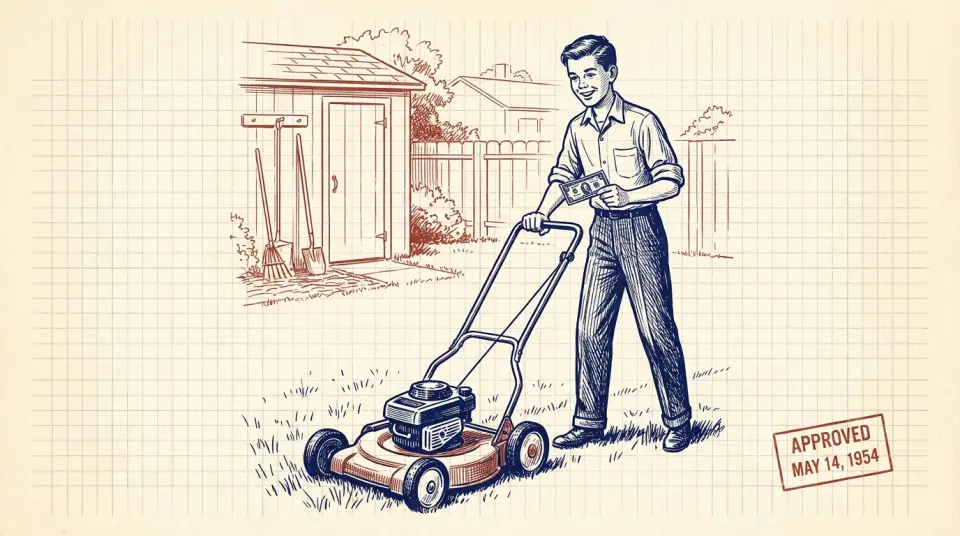
The 'Convenience Tax' isn't just about money. It’s about the loss of the 'negotiated' economy. With cash, you can haggle at a garage sale or give a kid five dollars for mowing the lawn. Digital systems struggle with these human, informal exchanges without a platform taking a cut. And then there's the 'Systemic Break-Even.' For a small town, the difference between a cash-heavy economy and a card-only economy is the difference between a thriving main street and a main street that is slowly being bled dry by distant data centers.
Ledger entry: Cash acts as a barrier to central planning. It is the only financial tool that exists entirely outside of a monitored network, providing a necessary escape valve for the individual. To reclaim this sovereignty, start small. Carry fifty dollars in your wallet at all times. Use it for your morning coffee or your lunch. Notice the difference in how you value that purchase. Notice the lack of a 'tip' prompt asking for thirty percent.
Tell the merchant you're paying cash because you want them to keep the full price. You'll be surprised how many of them will thank you. It’s a small act of rebellion that strengthens the local fabric of your city.
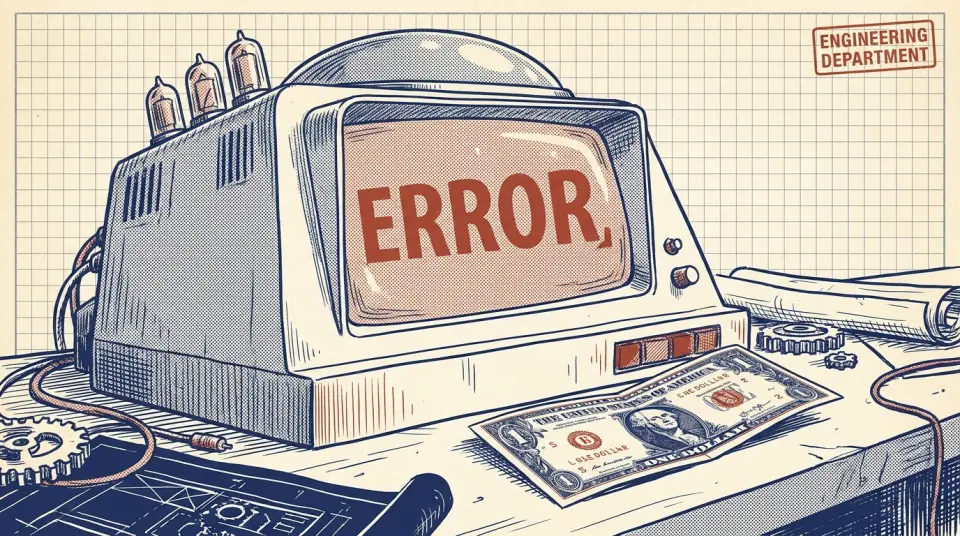
The machine wants you to believe that cash is dirty, slow, and obsolete. But in a world of rising fees, constant data breaches, and centralized control, the most advanced financial technology you can own is a piece of paper that says 'Legal Tender' on the front. Final Ledger: Cash is a one-time purchase of financial freedom. It requires no subscription, charges no interest, and never shares your location. It is the only money that is truly yours.
Watch this one on YouTube or subscribe to the channel for the next breakdown.