Articles / Subscriptions
How to Watch Everything for $0/Month
You fled cable to save money, and now you pay five streaming services more than that old cable bill, for the privilege of renting shows that vanish overnight. This is how the "streaming trap" was built, and the exact free and one-time-purchase setup that gets you off the treadmill for good: an antenna, your library card, and your own private media server.
Did streaming really save money over cable?
In 2011, we were told streaming would kill cable and liberate our wallets. It was a beautiful lie. Today, the average household pays for five services, totaling more than the cable bill we originally fled. We’ve entered the era of the 'Streaming Hydra.' Every time you cancel one service out of spite, two more niche platforms emerge, each clutching a single show you actually enjoy behind a ten-dollar paywall.
It’s a masterclass in psychological warfare. You aren't paying for content; you’re paying for the 'permission' to access a digital library that can, and will, delete your favorite show overnight for a tax write-off.
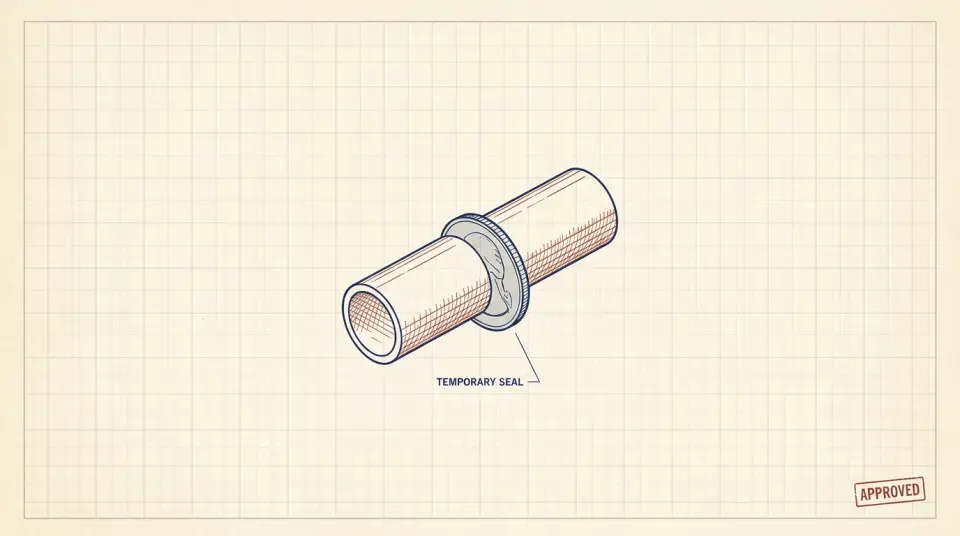
This is the 'Rental Trap.' It’s a leak in your balance sheet that never plugs. But today, we stop the bleeding. We are going to build a high-fidelity media empire for exactly zero dollars a month.
How do you get free HD television with an antenna?
Step one: The Ghost in the Air. Before the internet was a series of tubes, it was a series of waves. Specifically, Over-The-Air high-definition signals that the government mandates broadcasters provide for free. A twenty-dollar one-time investment in a basic leaf antenna brings in local news, live sports, and major networks in uncompressed HD. It’s the closest thing to a legal 'infinite money glitch' in broadcasting.
What does a library card get you for free?
Next, we tap into the greatest socialist success story in history: The Public Library. It is the only place left in society where you can walk in, ask for something, and leave without swiping a card.
If you haven't checked lately, libraries stopped being just dusty rooms for encyclopedias. They are now digital powerhouses. Your library card is a VIP pass to two specific 'Netflix Killers': Libby and Kanopy. Kanopy offers thousands of prestige films and documentaries with zero ads. Libby handles your ebooks and audiobooks. Total cost? Zero. Impact on your 'to-watch' list? Catastrophic. Ledger entry: One library card equals fifteen dollars a month saved.
How does rotating streaming subscriptions work?
But what about the 'Must-Watch' blockbusters? This is where we apply the 'Mercenary Rotation.' Most people treat streaming like a utility, always on. This is a tactical error. Treat them like a seasonal contractor. Subscribe for one month. Binge the exactly two shows that aren't garbage. Cancel immediately. If you aren't cancelling at least one service every thirty days, you’re donating to a multi-billion dollar corporation’s Christmas fund.
How can you own movies that never vanish?
Now, let's talk about the 'Licensing Void.' When a show leaves a platform, it often vanishes into digital purgatory. The only way to truly 'own' a digital file is to physically hold the bits in your hand. Thrift stores are currently graveyards for 1080p Blu-rays that people threw away in a fit of 'minimalism.' You can buy a masterpiece for a dollar. It works when the internet is down. It works when the studio goes bankrupt.
How do you build a home media server with Plex or Jellyfin?
Now, the holy grail of the Free Life: The Home Media Server. This sounds like 'IT Nerd territory,' but it’s actually just a computer that stays awake so you can sleep better. Specifically, Plex or Jellyfin. Think of Jellyfin as your own private Netflix. You feed it your ripped DVDs and 'found' files, and it organizes them with beautiful posters, trailers, and metadata. No monthly fee. No 'suggested for you' algorithms.
The initial setup requires an afternoon of effort. But once it's live, you have created a permanent, sovereign digital fortress. You are no longer a tenant in the cloud; you are the landlord of your own entertainment. The 'It Gets Worse' escalation: Subscription services are currently testing 'Ad-Lite' tiers. You pay them ten dollars a month so they can show you car commercials. This is the financial equivalent of paying someone to punch you in the arm.
They are also cracking down on password sharing. They want every individual human being in your household to have a unique billing relationship. It’s not about 'security.' It’s about squeezing the last drops of juice from the lemon. If you follow the server path, you bypass all of it. Your server doesn't care if your brother in Ohio is watching. Your server doesn't have a 'Terms of Service' that changes when the CEO needs a new yacht.
How much does an everything streaming stack really cost?
Let’s look at the math. A standard 'Everything' stack, Netflix, Disney+, Max, Hulu, and YouTube Premium, runs about eighty dollars a month. That’s nearly a thousand dollars a year. That’s a vacation. That’s a retirement contribution. Instead, buy a 12-terabyte hard drive once. It will hold roughly 3,000 high-definition movies. It doesn't charge you more for 4K. It doesn't ask if you're 'still watching.' It just sits there, being a loyal servant.
The true cost of streaming isn't just the money. It's the 'Decision Fatigue.' We spend twenty minutes scrolling through a menu of 10,000 shows, only to watch a rerun of a sitcom from 2004. The paradox of choice is a tax on your time. A curated, owned library fixes this. You only keep what you actually value. Your media collection becomes a reflection of your taste, not the result of what an algorithm wants to push this week to satisfy a producer's ego.
What does a zero-dollar streaming setup look like?
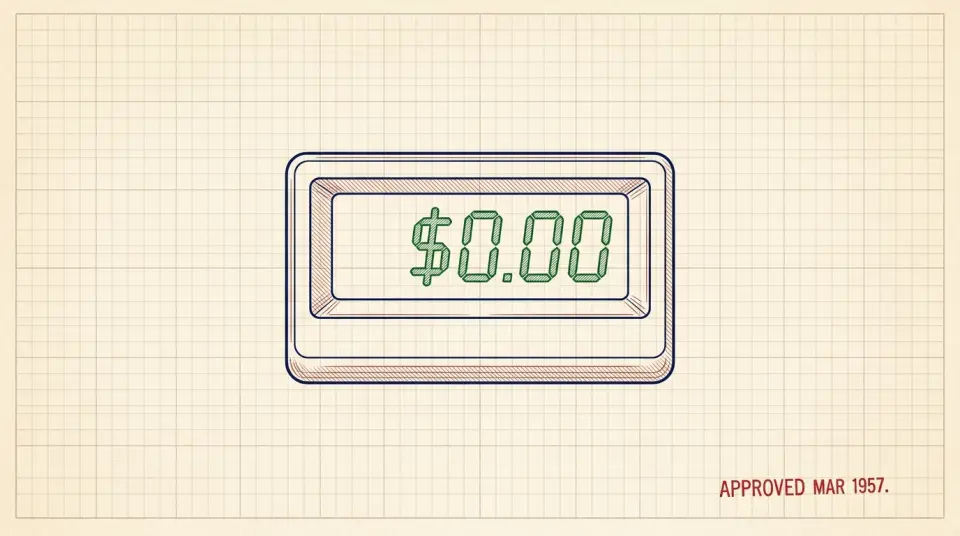
To recap: Install an antenna for the basics. Use your library card for the prestige stuff. Rotate one subscription at a time for the hype. Build a server for the permanent collection. Ledger entry: Total monthly cost? Zero. The streaming wars are only expensive if you choose to fight them. If you simply walk off the battlefield and build your own kingdom, the giants have no power over you. Stop renting your culture. Start owning it.
The exit is right there. All you have to do is stop paying for the privilege of being a product.
Watch this one on YouTube or subscribe to the channel for the next breakdown.