Articles / Built to break
Buy It Once: 12 Things That Outlive You
The subscription-and-replace economy wants you buying the same cheap thing over and over forever. This flips it: the specific things worth buying ONCE, at quality, that last decades or a lifetime, cast-iron cookware, a proper knife, welted leather boots, hand tools, a safety razor, a mechanical watch, solid wood furniture, why the cheap version is a hidden tax (the Vimes "Boots" theory of economics), and how to spot Buy-It-For-Life quality. Own it once, own it forever.
Why do your appliances seem built to fail?
In the basement of a nondescript office in Silicon Valley, there is almost certainly a committee dedicated to ensuring your toaster feels 'guilty' for surviving more than three years. They call it innovation. We live in the era of 'The Rental Ghost.' You don’t own your software, your movies, or your music, and if your high-end fridge’s Wi-Fi chip dies, you don't even own your leftovers.
But today, we’re performing a mechanical audit on the things that refuse to die. The objects that mock the landfill. The things you buy once, so your heirs can argue over them later. Welcome to the world of Buy-It-For-Life. It’s not just a shopping strategy; it’s an act of financial insurgency against a world that wants you to subscribe to your own shoes.
What is the boots theory of why cheap costs more?
Before we look at the 'Permanent List,' we must understand the math of the trap. This is the Vimes 'Boots' Theory of Socioeconomic Unfairness, originally theorized by the late Sir Terry Pratchett. If you buy a fifty-dollar pair of boots that lasts a season, you’ve spent five hundred dollars over a decade. If you buy a five-hundred-dollar pair that lasts twenty years, you’re practically making money.
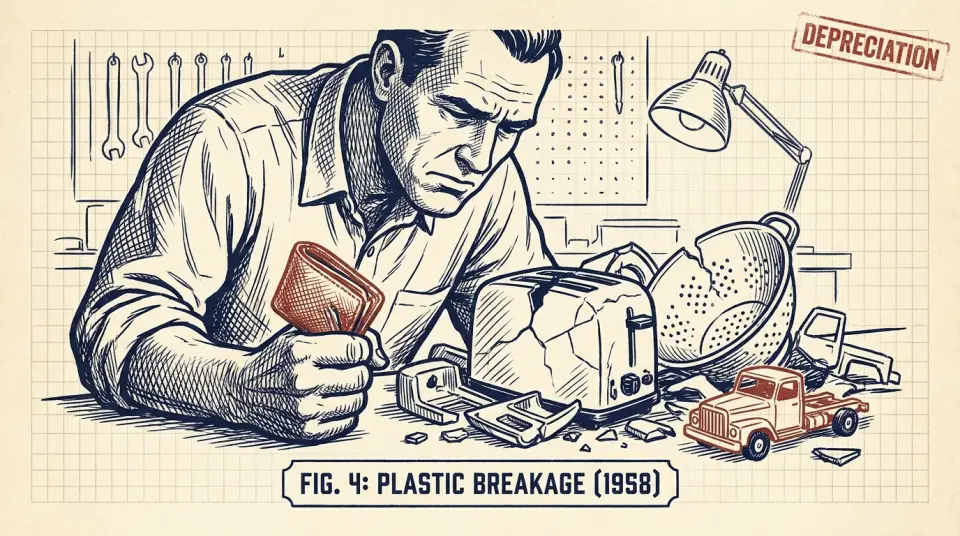
Being poor is expensive. The 'cheap' option is actually a hidden tax on people who can't afford the entry fee for durability. Today, we break the cycle by identifying the structural 'Ever-Things.'
Which kitchen and workshop tools last for decades?
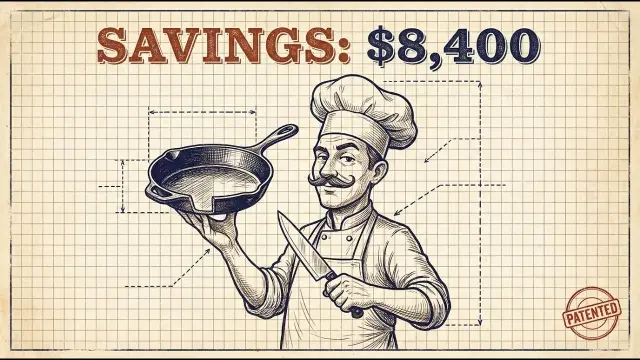
Exhibit A: The Cast-Iron Skillet. It is a four-pound slab of geological stubbornness. It doesn't have a 'non-stick coating' because it expects you to earn its smoothness through years of bacon-based labor. A Teflon pan is a three-year countdown to eating plastic flakes. A cast-iron pan is a murder weapon that makes excellent cornbread. It is the only kitchenware that improves with neglect and heat.
Ledger Entry: Cast iron costs forty dollars once. Over forty years, that’s one dollar per year of service. If you lose it in a divorce, it was likely the most valuable thing in the house.
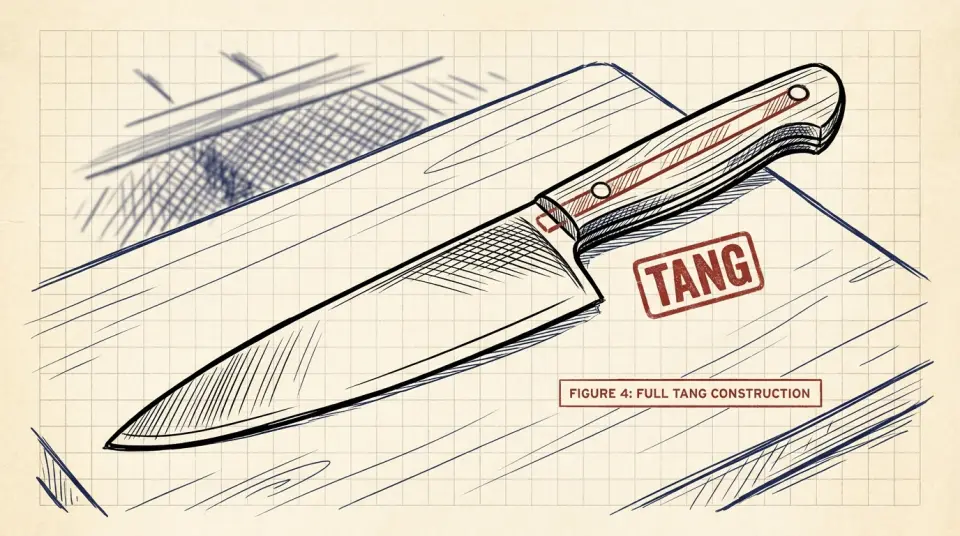
Exhibit B: The Chef’s Knife. Not the twelve-piece set from the big-box store that couldn't cut a ripe tomato. I’m talking about a full-tang, high-carbon steel workhorse. A good knife is an extension of the arm. It can be sharpened a thousand times. The cheap ones are stamped from soda-can metal and held together by optimism and toxic glue.
Exhibit C: Mechanical Tools. If your screwdriver is made of plastic that smells like recycled toys, it will fail when you actually need torque. Buy forged steel with a lifetime warranty. Brands like Estwing or Snap-on aren't selling tools; they’re selling the certainty that the tool won't snap in your hand while you’re swearing at a rusted bolt on a Sunday afternoon.
Are razors, wool, fountain pens and solid wood worth it?
Exhibit D: The Safety Razor. We have been convinced that we need five blades and a vibrating handle to shave. This is a lie designed to sell you three-dollar plastic cartridges. A stainless steel safety razor will last until the sun burns out. The blades cost ten cents. You will save enough money over your lifetime to buy a small island, or at least a very nice car.
Exhibit E: Wool and Natural Fibers. Synthetic 'fast fashion' is essentially wearing refined oil. It pills, it reeks after three hours, and it melts if you stand too close to a toaster.
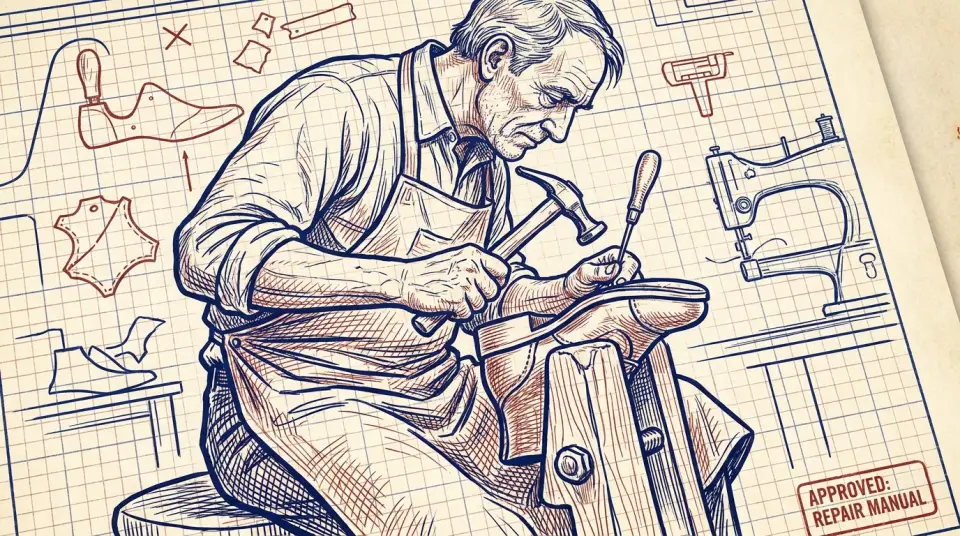
A heavy wool coat or a Goodyear-welted boot can be repaired. In a world of 'throwaway' items, the ability to 'repair' is a superpower. If you can't fix it, you don't own it. Exhibit F: The Fountain Pen. In the trash-can of history, billions of plastic ballpoints reside. A fountain pen is a refillable machine for thought. It turns writing into a mechanical ritual.
Then there’s furniture. Solid wood is a carbon sink that lasts centuries. Particle board is just sawdust held together by hope and formaldehyde, waiting for its first encounter with a spilled glass of water.
How do you stop renting your movies and music?
We've mastered physical ownership, but what about the invisible taxes? The things that don't sit on your shelf, but sit on your bank statement like a parasite?
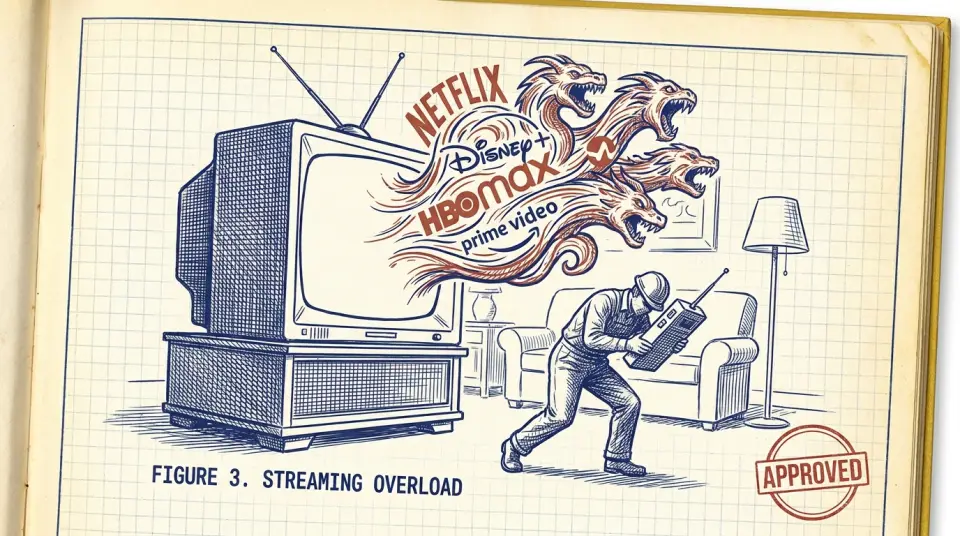
The streaming industry has become a hydra. Every time you cancel one service to save money, two more 'Plus' apps sprout from the neck of your smart TV. It is a rent-seeking siege. You are currently paying for the privilege of not owning anything. If Netflix loses a license, the show you love vanishes. You are paying for a library card where the librarian can burn the books at any time.
Let’s look at the Digital Escape Plan. If we want to 'Buy It Once,' we have to move our culture off the cloud and back onto the silicon we actually own. Step one: The Media Server. Software like Jellyfin or Plex allows you to host your own movies and music. You buy the hard drive once. You buy the Blu-ray once. You own it forever.
Is it more work than clicking a 'Subscribe' button? Yes. But so is seasoning a cast-iron skillet. The effort is what creates the ownership. No one can 'un-license' a file on your own hard drive. Step two: The Antenna. People have forgotten that high-definition television is literally floating through the air for free. An OTA antenna is a twenty-dollar piece of wire that kills the cable bill.
Step three: The Library Apps. Libby and Kanopy are the last bastions of civilization. Your taxes already paid for them. It’s a 'subscription' you’ve already bought, use it. If you absolutely must have a service, rotate them. One at a time. Do not let four separate corporations bill you fifteen dollars a month for the 'opportunity' to scroll through menus for an hour.
What does an owned life do to your monthly burn rate?
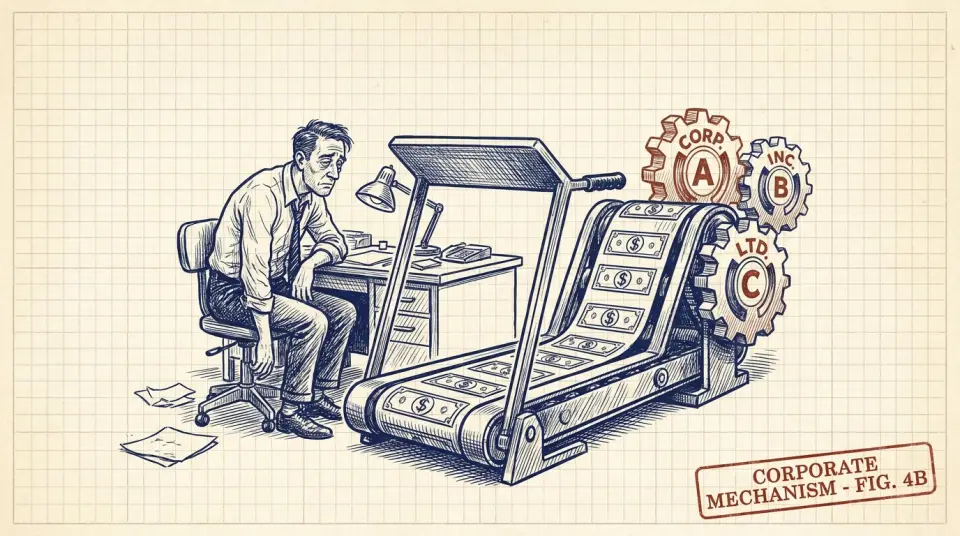
The subscription world wants you to be a perpetual tenant. They want your life to be a series of monthly payments that end the moment you stop working. This is financial fragility by design. But when you buy the 'Ever-Things', the boots, the tools, the owned media, you are building an 'Owned Life.' You are reducing your 'burn rate' to the bare minimum.
Ownership is the ultimate form of self-reliance. It is the ability to say 'no' to a price hike because you already have everything you need. It is the end of the 'invisible tax.' How do you spot BIFL quality? Look for 'User Serviceable.' If it’s glued shut, it’s a ticking time bomb. If it has screws and a manual, it’s an heirloom.
Look for heavy, simple materials. Leather, steel, wood, wool. If it’s made of 'polymers' and 'proprietary alloys,' proceed with extreme caution. The marketing department loves fancy names for cheap plastic.
Why does a French press outlast a smart coffee maker?
Let’s talk about the French Press. It’s two pieces of glass and steel. It has no motherboard to fry and no proprietary pods to buy. It makes coffee, and it will do so until the end of time. Compare that to a 'Smart Coffee Maker' that requires an app update to boil water. Which one is the 'advanced' technology? The one that works for thirty years, or the one that bricks itself in three?
We have been trained to equate 'New' with 'Better.' But in the engineering of permanence, 'Old' is often a filter for what actually works. If it survived fifty years, it can survive fifty more.
Why is buying once the shortest path to early retirement?
The goal isn't to be a miser. The goal is to be a steward. To own things that are worthy of your space and your care. To stop the leak in your bucket by buying a better bucket. Every 'Buy-It-Once' purchase is a vote against the landfill. It’s a refusal to participate in a cycle of waste that treats the planet like a disposable diaper.
It’s about freedom. Every dollar you don’t have to spend next year is a dollar you don’t have to earn. Ownership is the shortest path to early retirement. When you surround yourself with things that outlive you, your relationship with time changes. You stop chasing the 'latest' and start enjoying the 'best.'
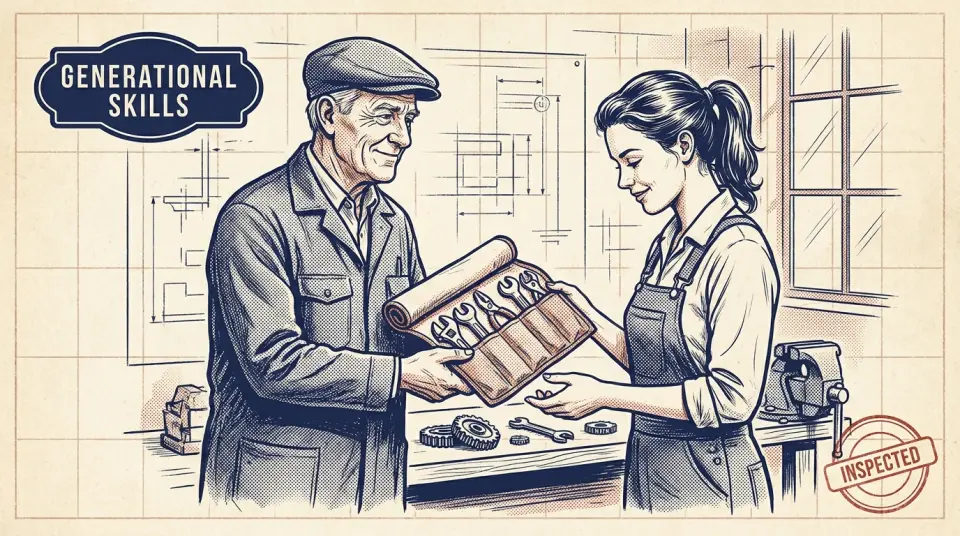
The next time you’re about to buy something, ask yourself: 'Will this be a memory in two years, or will I be handing this to someone I love in twenty?' If the answer is the latter, buy it. If the answer is 'I hope it lasts through the warranty,' put it back. Your future self, and your bank account, will thank you.
The machines are waiting. Choose the ones that don't break. Choose the 'Ever-Things.' Because in a world of temporary rentals, ownership is the only true luxury left. Now, go season your skillet. It’s been waiting for you. And maybe cancel that streaming service you haven't watched since 2021. The librarian is waiting. Ledger Entry: Total savings from permanent ownership? Immeasurable. Peace of mind? Guaranteed.
Watch this one on YouTube or subscribe to the channel for the next breakdown.